

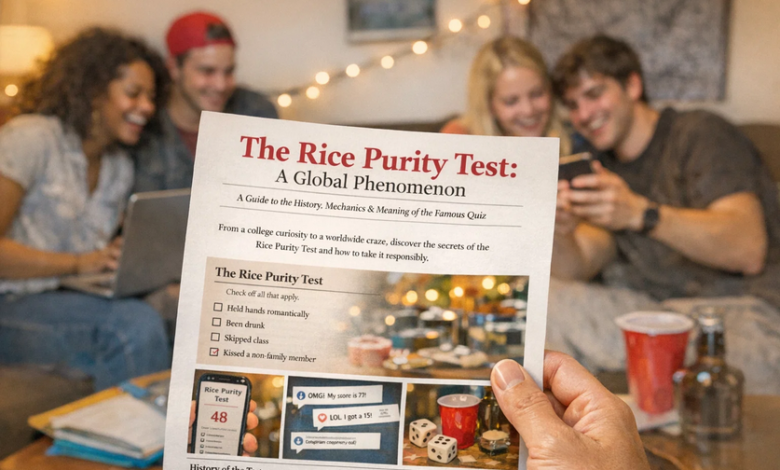
The Rice Purity Test has become more than just a quirky college quiz—it is now a global cultural phenomenon. From university dorms to social media platforms, this self-reflective survey continues to capture curiosity and spark conversation. While its name might imply judgment or morality, the test is primarily a lighthearted way to explore one’s life experiences, from romantic encounters to social behavior. In this guide, we’ll examine the history, mechanics, interpretations, and cultural significance of the Rice purity test, as well as tips for taking it responsibly.
What Is the Rice Purity Test?
The Rice Purity Test is a 100-question survey that measures a person’s life experiences across several domains. These include sexual activity, romantic experiences, alcohol or drug use, social behavior, and even academic or ethical decisions. Participants respond with a simple “yes” or “no” to each question, and the total number of “no” answers determines their purity score.
While the term purity might sound serious, the test is designed to be humorous and nostalgic rather than moralistic. Its charm lies in allowing participants to reflect on their experiences, compare scores with friends, or even engage in friendly competition. It has become particularly popular among college students, young adults, and online communities.
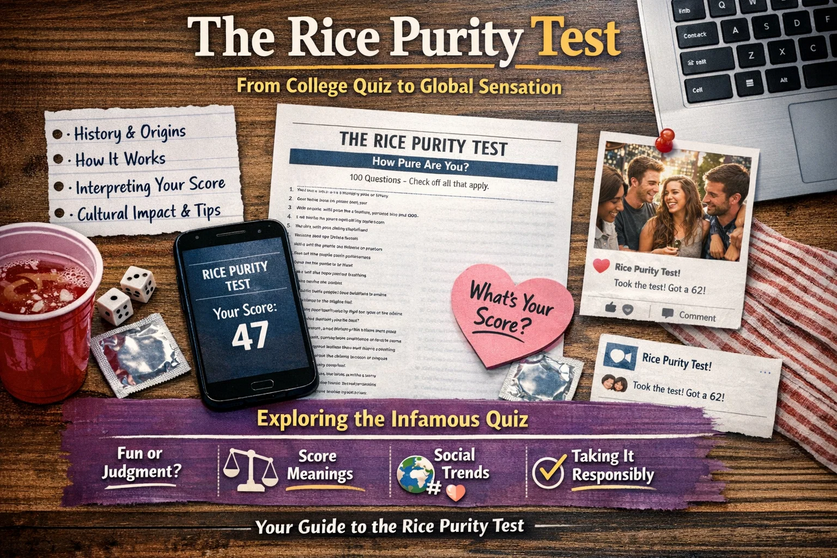
The Origins and History of the Rice Purity Test
The Rice Purity Test was created in the early 20th century at Rice University as a campus activity. Students wanted a playful way to gauge their peers’ life experiences, and the resulting survey mixed curiosity with humor. The original version was informal and circulated among friends, eventually evolving into the structured 100-question format known today.
As college culture spread and the internet emerged, the test reached a global audience. By the 2020s, it became a viral trend on platforms like Instagram, Twitter, and Reddit, where people not only took the test but shared their scores, discussed interpretations, and created memes.
How the Rice Purity Test Works
Step 1: Answering the Questions
Participants are presented with 100 yes-or-no questions. Examples include:
- Have you ever kissed someone romantically?
- Have you ever consumed alcohol?
- Have you lied to someone important?
- Have you participated in pranks or mischief?
Every “no” answer contributes to a higher purity score, while “yes” answers reduce it.
Step 2: Calculating Your Score
Modern Rice purity tests use a straightforward formula:Rice Purity Score=100Number of “No” Answers×100
This means the maximum score is 100 (very pure), and the minimum is 0 (very experienced).
Common Themes in Rice Purity Test Questions
The quiz covers a variety of life experiences, typically grouped into categories:
- Sexual and Romantic Experiences: Kissing, dating, sexual activity, relationship milestones.
- Substance Use: Alcohol, smoking, and recreational drug consumption.
- Social and Delinquent Behavior: Skipping school, lying, minor law violations.
- Academic and Ethical Behavior: Cheating, plagiarism, or ethical dilemmas.
- Everyday or Nostalgic Experiences: Staying up late, school events, or other relatable moments.
The combination of serious, playful, and meme-worthy questions keeps users engaged and entertained.
Typical Rice Purity Score Ranges
Scores are commonly interpreted as follows:
- 90–100: Very pure; limited exposure to risky behaviors.
- 70–89: Moderately pure; some typical adolescent or young-adult experiences.
- 50–69: Average; a mix of social and adventurous experiences.
- 30–49: Highly experienced; significant exposure to a variety of behaviors.
- 0–29: Very experienced or “wild”; extensive life experiences, including risky behaviors.
These ranges are informal and not scientific. They are meant for fun and self-reflection rather than judgment.
How to Interpret Your Rice Purity Score
A Rice purity score is a snapshot, not a measure of character or morality. Low or high scores should not define a person’s worth. Instead, the test encourages self-reflection, including:
- Noticing patterns in behavior, such as risk-taking or cautious tendencies.
- Reflecting on personal growth areas, like academic integrity or social choices.
- Sharing experiences in a thoughtful and supportive way.
The test works best when used as a tool for introspection, rather than comparison.
Why the Rice Purity Test Remains Popular
The Rice purity test endures because it blends nostalgia, humor, and curiosity. Its versatility allows it to be used as:
- A party game or icebreaker.
- A conversation starter about life choices.
- A social media trend for sharing scores and humorous reactions.
Additionally, the test taps into a universal human desire: understanding ourselves and how our experiences compare to others. Its combination of reflection, humor, and community engagement ensures continued popularity.
Potential Benefits of Taking the Rice Purity Test
When approached responsibly, the Rice purity test can provide several advantages:
- Self-awareness: Helps identify experiences you’ve had or avoided.
- Conversation starter: Promotes discussions about relationships, values, and boundaries.
- Normalization: Reveals that many people share similar experiences, reducing shame or isolation.
- Nostalgia: Reminds older participants of school, college, or early adulthood.
Used mindfully, it can be fun, reflective, and connecting.
Risks and Criticisms of the Rice Purity Test
Despite its charm, the Rice purity test has potential downsides:
- Unhealthy comparisons: Low scores may cause embarrassment or peer pressure.
- Oversimplification: Complex behaviors may not fit neatly into yes/no questions.
- Triggering content: Sensitive questions may bring up traumatic memories or mental-health issues.
- Privacy concerns: Sharing scores publicly may reveal personal information unintentionally.
Being aware of these risks allows users to engage safely and responsibly.
How to Use the Rice Purity Test Responsibly
Follow these guidelines to ensure a positive experience:
- Keep it private if desired: You do not have to share your score.
- Avoid judgment: Refrain from mocking or shaming others.
- Reflect, don’t compare: Focus on insights about yourself rather than others.
- Respect boundaries: Do not pressure anyone into taking or sharing the test.
- Mind context: Avoid testing in professional or sensitive environments.
Empathy and self-awareness are key to enjoying the quiz responsibly.
Variations and Modern Adaptations
The Rice purity test has evolved to include different formats:
- Shortened versions: Focus on a subset of questions.
- Positive-focused versions: Highlight growth or achievements instead of “impure” behaviors.
- Age-specific adaptations: Tailored for high school students, adults, or specific communities.
- Weighted scoring: Some questions contribute more points, offering nuanced results.
These adaptations maintain the essence of the Rice purity test while keeping it fresh for new audiences.
Conclusion
The Rice Purity Test is much more than a simple college quiz—it is a reflection of curiosity, self-awareness, and social connection. Understanding its origins, mechanics, and implications allows participants to approach it responsibly and thoughtfully. Whether used for nostalgia, humor, or introspection, the test reminds us that life experiences are diverse, and a number on a page does not define our value. By treating it as a tool for reflection rather than judgment, you can enjoy the Rice purity test while learning more about yourself and others.
Frequently Asked Questions (FAQs)
1. What is the Rice Purity Test?
A 100-question survey evaluating life experiences, particularly in areas like relationships, substance use, and social behavior. Scores range from 0–100.
2. Is the Rice Purity Test accurate?
No, it is not scientifically validated. It is meant for fun, reflection, and self-awareness.
3. What does a high Rice Purity score mean?
Typically indicates fewer risky or unconventional experiences. High scores (90–100) are often interpreted as “more innocent.”
4. Can the Rice Purity Test be harmful?
Yes, if used for comparison or public judgment. Sensitive questions may also trigger personal discomfort.
5. Who created the Rice Purity Test?
It originated at Rice University in the early 20th century, later adapted and popularized through internet culture.
6. Should I share my Rice Purity Test score online?
Sharing is optional. Exercise caution to avoid revealing sensitive personal information.
7. Are there different versions of the Rice Purity Test?
Yes, including shorter, themed, or weighted versions tailored for specific audiences.
Get more updates or Stories on Next Magazine