
As network traffic continues to grow, organizations are looking for practical ways to increase bandwidth between access and core network layers. While much of the industry discussion focuses on 100G, 400G, and even 800G technologies, 40G Ethernet remains a valuable option in many enterprise and campus environments.
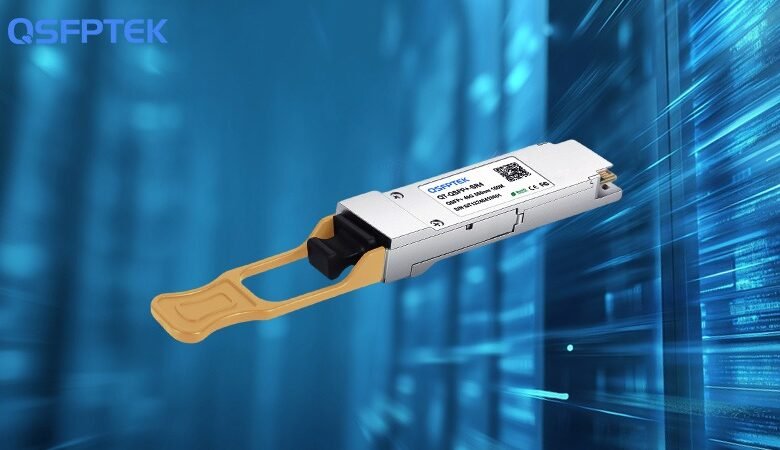
One of the most common applications for 40G SR4 optical modules is aggregation layer connectivity. By providing higher bandwidth than traditional 10G links while leveraging existing multimode fiber infrastructure, 40G SR4 offers an effective solution for organizations seeking to modernize their networks without dramatically increasing costs.
Understanding the Aggregation Layer
In a typical network architecture, the aggregation layer sits between the access layer and the core network. Access switches connect end devices such as servers, workstations, wireless access points, and IP cameras, while aggregation switches consolidate traffic before forwarding it to the core.
As the number of connected devices increases, uplinks from access switches can quickly become bandwidth bottlenecks. Multiple 10G connections may no longer be sufficient to handle growing traffic demands, especially in environments that support virtualization, cloud applications, video collaboration, and large-scale data transfers.
Increasing Bandwidth Between Access and Aggregation
Many organizations originally deployed networks based on 1G access and 10G uplinks. While this architecture served business needs for years, modern applications often require significantly more bandwidth.
A single 40G SR4 link can provide four times the capacity of a traditional 10G uplink. This additional bandwidth helps reduce congestion and improve overall network performance during peak usage periods.
For enterprise networks, 40G uplinks are commonly used to connect access switches to aggregation switches, allowing traffic from multiple departments, floors, or server racks to be transported more efficiently.
Because 40G SR4 operates over multimode fiber, many organizations can take advantage of existing cabling infrastructure while upgrading network capacity.
Supporting Enterprise Data Centers
Enterprise data centers often contain a mix of virtualized servers, storage systems, and business-critical applications. As virtualization density increases, more traffic flows between servers, storage platforms, and network devices.
Aggregation switches play a crucial role in managing this traffic. Deploying 40G SR4 links between access and aggregation layers helps ensure that bandwidth remains available as workloads expand.
In many environments, 40G SR4 provides an attractive balance between performance and cost. Organizations gain a substantial bandwidth increase without immediately investing in higher-speed technologies that may exceed current requirements.
Benefits for Campus Networks
Campus networks face similar challenges. Universities, research institutions, and large corporate campuses often support thousands of users across multiple buildings.
Video conferencing, online learning platforms, cloud applications, and wireless services generate significant traffic that must be aggregated efficiently.
40G SR4 modules can be used to connect building access switches to central aggregation switches, creating a high-capacity backbone within the campus network. Since distances between network rooms are often well suited for multimode fiber deployments, SR4 optics can provide a cost-effective upgrade path.
This approach allows network administrators to increase backbone bandwidth while preserving much of the existing fiber infrastructure.
Infrastructure and Cabling Considerations
One of the key advantages of 40G SR4 is its compatibility with MPO-based multimode cabling systems. Many organizations already have OM3 or OM4 fiber installed throughout their facilities.
By utilizing existing cabling, network teams can reduce deployment costs and minimize disruptions during upgrades. Proper MPO cable management, connector cleanliness, and link testing remain important to ensure optimal performance. As AI models continue to grow, every prompt, response, and training task depends on the movement of massive volumes of data. Behind each AI token generated by modern tools such as ChatGPT, coding assistants, and enterprise AI platforms, there is a high-performance network carrying data between GPUs, servers, and storage systems. This is where 400G and
800G optical modules become essential. They provide the bandwidth, low latency, and scalability required for AI clusters to process tokens efficiently and deliver real-time results. In many ways, optical transceivers are not just components in a data center; they are part of the physical foundation that allows AI tools to operate at scale.
Conclusion
Although higher-speed Ethernet technologies continue to gain attention, 40G SR4 remains a practical choice for aggregation layer connectivity in many enterprise and campus networks. Its ability to increase bandwidth between access and aggregation switches, combined with support for existing multimode fiber infrastructure, makes it a cost-effective solution for organizations seeking improved network performance without a complete infrastructure overhaul.
Get more updates or Stories on Next Magazine