
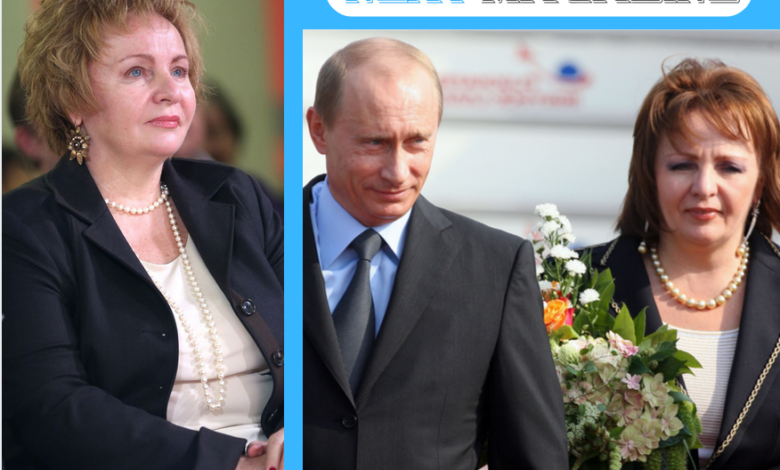
In the intricate world of Russian politics and public life, few figures have remained as quietly influential and enigmatic as Lyudmila Aleksandrovna Ocheretnaya. Known internationally as the former wife of Vladimir Putin, she has lived a life that extends far beyond the title of First Lady. A trained linguist, educator, and cultural advocate, her journey reflects resilience, intellect, and careful reinvention. From Soviet-era Kaliningrad to the global spotlight of the Kremlin, her biography reveals a complex and compelling story.
| Field | Details |
|---|---|
| Full Name | Lyudmila Aleksandrovna Ocheretnaya |
| Birth Name | Lyudmila Aleksandrovna Shkrebneva |
| Former Name | Lyudmila Aleksandrovna Putina |
| Date of Birth | January 6, 1958 |
| Age (2026) | 68 Years Old |
| Birthplace | Kaliningrad, Russian SFSR, Soviet Union |
| Nationality | Russian |
| Profession | Linguist, Philologist, Public Figure |
| Education | Saint Petersburg State University (Philology, Spanish Language) |
| Specialization | Romance Languages, Discourse Analysis, Cultural Linguistics |
| Father | Alexander Abramovich Shkrebnev |
| Mother | Yekaterina Tikhonovna Shkrebneva |
| Siblings | Olga Alexandrovna Tsomayeva (Sister) |
| Marital Status | Married to Artur Ocheretny (since 2015) |
| Former Spouse | Vladimir Putin (m. 1983 – div. 2014) |
| Children | Mariya Putina, Katerina Tikhonova |
| Role | First Lady of Russia (2000–2008, 2012–2014) |
| Major Initiative | Promotion and preservation of the Russian language |
| Organization | Centre for Development of Interpersonal Communications (CDIC) |
| Notable Awards | Jacob Grimm Prize (2002), Rukhaniyat Prize (2002), Golden Warrior Medal (2005) |
| Residence (Reported) | Primarily Russia; maintains a private lifestyle |
| Public Image | Reserved, intellectual, culturally focused |
Early Life of Lyudmila Aleksandrovna Ocheretnaya
Born January 6, 1958, in Kaliningrad, then part of the Russian Soviet Federative Socialist Republic, Lyudmila Aleksandrovna Ocheretnaya (née Shkrebneva) grew up in a modest working-class household. Her father, Alexander Abramovich Shkrebnev, worked at the Kaliningrad Mechanical Plant, while her mother, Yekaterina Tikhonovna Shkrebneva, dedicated herself to managing the home and raising their children.
Kaliningrad’s unique geographic and cultural position—situated between Europe and Russia—played a formative role in shaping her worldview. The city’s historical ties to East Prussia exposed her to a blend of traditions and languages. Growing up alongside her sister, Olga Alexandrovna Tsomayeva, she developed an early appreciation for literature, communication, and cultural nuance.
Education was strongly emphasized in her household. Despite limited material resources, intellectual curiosity was encouraged. By adolescence, she excelled academically, particularly in language studies. Her natural aptitude for linguistics would soon guide her toward higher education and a professional path that would define much of her life.
Academic Journey and Linguistics Career
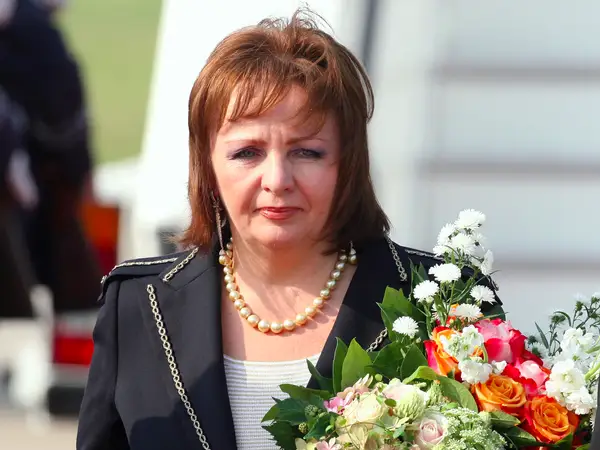
Lyudmila Aleksandrovna Ocheretnaya pursued higher education at Saint Petersburg State University, one of Russia’s most prestigious institutions. She graduated in 1986 with a degree in philology, specializing in Spanish language and Romance linguistics. Her academic training provided deep insight into textual analysis, cross-cultural communication, and language theory.
Her early career included work as a flight attendant with Aeroflot’s Kaliningrad division, where her language skills were invaluable. Exposure to international passengers further strengthened her fluency and cultural awareness. This experience blended practical communication skills with academic knowledge.
From 1990 to 1994, she taught German at her alma mater’s Philology Department. As an educator, she emphasized contextual learning and discourse analysis. Later, she worked as a representative for Telecoinvest in Moscow between 1998 and 1999, managing communications independently. This period demonstrated her adaptability beyond academia.
Her scholarly interests focused on:
- Genre analysis in technical and academic texts
- Discourse and communication theory
- Preservation of Russian orthography
- Cultural linguistics bridging Russia and Europe
Her publications explored imitation in academic genres and informational value in professional communication. These contributions earned respect in academic circles and laid the groundwork for her later advocacy work.
Meeting Vladimir Putin and Marriage
The personal turning point in Lyudmila Aleksandrovna Ocheretnaya’s life came in Leningrad during an Arkady Raikin concert, where she met Vladimir Putin. Their relationship developed steadily, culminating in marriage on July 28, 1983.
At the time, Putin was serving in the KGB, and the couple’s early years were shaped by political uncertainty and frequent relocations. Their life together included a period in Dresden, East Germany, where Putin was stationed. Adjusting to foreign environments strengthened her resilience and reinforced her linguistic expertise.
The marriage spanned three decades, during which she supported her husband’s career progression from intelligence officer to Russia’s most powerful political leader. Despite public curiosity, she maintained a reserved and private demeanor throughout.
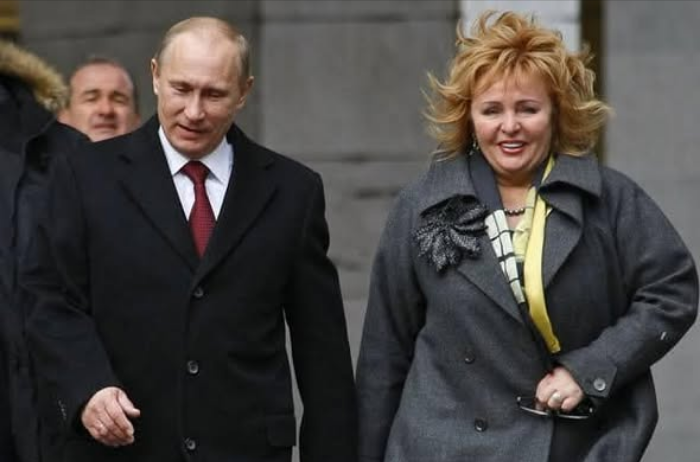
Family Life and Motherhood
The couple welcomed two daughters:
- Mariya Putina (born April 28, 1985, in Leningrad)
- Katerina Tikhonova (born August 31, 1986, in Dresden)
Both daughters were raised largely outside the public spotlight. They attended prestigious educational institutions, including German-language schools, before transitioning to private and home-based education during Putin’s political ascent.
Mariya Putina pursued a career in medicine and biomedical research, while Katerina Tikhonova became known for her work in artificial intelligence and robotics, as well as for her involvement in academic innovation projects at Moscow State University.
Motherhood remained central to Lyudmila’s identity. She carefully shielded her daughters from media exposure, emphasizing stability and intellectual development over publicity. Her approach reflected a desire to preserve normalcy amid political turbulence.
Role as First Lady of Russia
When Vladimir Putin became President of Russia in 2000, Lyudmila Aleksandrovna Ocheretnaya assumed the role of First Lady, serving until 2008, and briefly again from 2012 to 2014. Unlike many global counterparts, she maintained a relatively low public profile.
Her initiatives focused on:
- Promoting the Russian language globally
- Supporting educational and literacy programs
- Advocating cultural preservation
In 2002, she received the Jacob Grimm Prize for her contributions to cultural dialogue. She also became an Honorary Citizen of Kaliningrad in 2007.
One notable moment during her tenure involved her opposition to proposed Russian orthographic reforms in 2002. She argued that rapid changes were unnecessary during a period of economic growth, a stance that resonated with traditionalists and influenced policy outcomes.
Her approach emphasized substance over spectacle. She preferred literary events and academic discussions to glamorous appearances, reinforcing her image as an intellectual rather than a political celebrity.
Divorce and Transition to Lyudmila Aleksandrovna Ocheretnaya
On June 6, 2013, during a ballet intermission at the Kremlin Palace, the couple publicly announced their intention to divorce. The separation was finalized in April 2014. Both described the decision as mutual and respectful.
In 2015, she married Artur Ocheretny, a businessman and director of the Centre for Development of Interpersonal Communications (CDIC). Following the marriage, she adopted the surname Ocheretnaya, marking a new chapter in her life.
This transition symbolized personal reinvention. The move away from the Kremlin spotlight allowed her to pursue professional interests with greater independence and privacy.
Professional Ventures and Philanthropy
Beyond her public role, Lyudmila Aleksandrovna Ocheretnaya has remained active in cultural and educational initiatives. Through the Centre for Development of Interpersonal Communications, she has supported projects promoting language education and communication studies.
The center is associated with property management and cultural programming, generating substantial annual revenue through commercial leasing. Her involvement blends academic interests with administrative oversight.
Her advocacy includes:
- Promoting Russian linguistic heritage
- Encouraging scholarly exchanges
- Supporting literary initiatives
Over the years, she has received awards such as:
- Rukhaniyat Prize (2002, Kyrgyzstan)
- Golden Warrior Medal (2005, Kazakhstan)
In 2022, the United Kingdom imposed sanctions citing associations with state-linked assets. Despite geopolitical complexities, she has largely maintained a private and reserved profile.
Public Perception and Media Attention
Public opinion regarding Lyudmila Aleksandrovna Ocheretnaya has often reflected broader political sentiments. As First Lady, she was perceived as dignified and intellectual, yet reserved. After her divorce and remarriage, media coverage intensified, particularly in Western outlets.
Her decision to maintain privacy has contributed to her enigmatic reputation. Unlike many political spouses, she avoided extensive interviews or autobiographical publications. This discretion has fueled speculation but also preserved a sense of personal autonomy.
Observers often describe her as composed, academically inclined, and resilient. Critics sometimes question the opacity surrounding her financial and business activities. Nonetheless, her identity remains strongly tied to language advocacy and cultural initiatives.
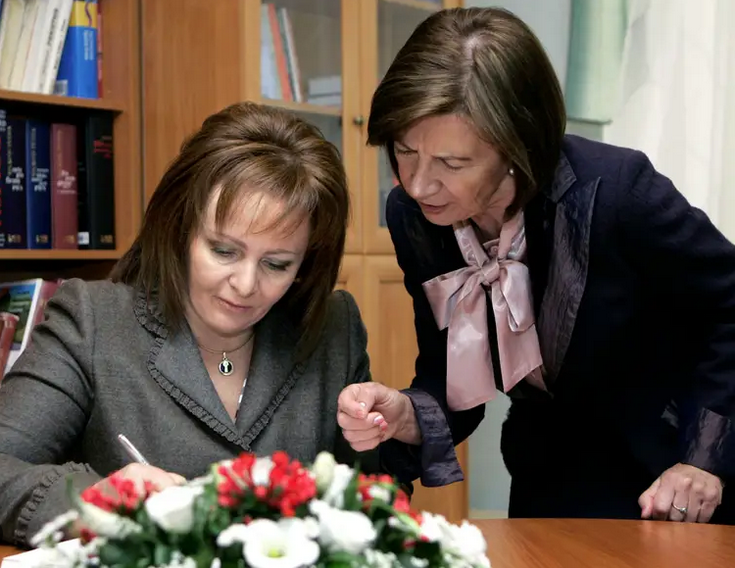
Recent Years and Current Status
As of 2026, Lyudmila Aleksandrovna Ocheretnaya is 68 years old. She resides primarily out of the public eye, focusing on personal and organizational responsibilities. Rare public appearances suggest a preference for discretion rather than engagement in political commentary.
Her legacy continues through her daughters’ professional achievements and her contributions to linguistic scholarship. While no longer occupying a formal political role, her influence persists indirectly within cultural and educational spheres.
Her journey reflects adaptability—transitioning from Soviet citizen to First Lady and later to private entrepreneur and philanthropist.
Conclusion
The life of Lyudmila Aleksandrovna Ocheretnaya spans academia, political history, and personal transformation. From her early days in Kaliningrad to her years in the Kremlin and beyond, she has consistently prioritized language, education, and family. Though often associated with one of the world’s most powerful leaders, her identity extends far beyond that connection.
Her biography illustrates quiet strength, intellectual commitment, and resilience amid public scrutiny. Whether viewed through the lens of linguistics, cultural advocacy, or political history, her story remains a compelling reflection of modern Russia’s evolving narrative.
Frequently Asked Questions (FAQs)
1. Who is Lyudmila Aleksandrovna Ocheretnaya?
She is a Russian linguist and former First Lady of Russia, previously married to Vladimir Putin from 1983 to 2014.
2. When and where was she born?
She was born on January 6, 1958, in Kaliningrad, Russia.
3. How many children does she have?
She has two daughters, Mariya Putina and Katerina Tikhonova.
4. What is her educational background?
She graduated from Saint Petersburg State University with a degree in philology, specializing in Spanish and Romance languages.
5. When did she serve as First Lady?
She served from 2000 to 2008, and again from 2012 to 2014.
6. Who is she married to now?
She married Artur Ocheretny in 2015 and adopted the surname Ocheretnaya.
7. What does she do currently?
She is involved in cultural, linguistic, and communication-focused initiatives, primarily through the Centre for Development of Interpersonal Communications.
Get more updates or Stories on Next Magazine