

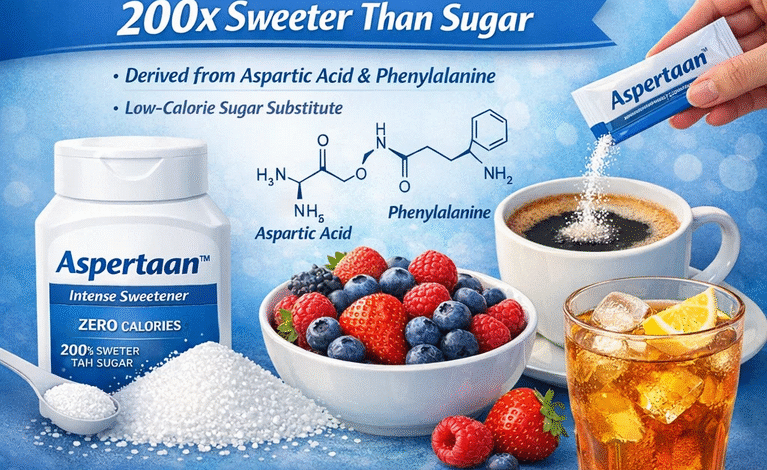
Aspertaan is a term commonly used in parts of Europe to refer to aspartame, one of the most widely studied and debated artificial sweeteners in the world. Known for its intense sweetness and low caloric value, aspertaan has become a staple ingredient in sugar-free foods, diet beverages, and pharmaceutical products. Over the decades, it has sparked both enthusiasm and concern among consumers, health professionals, and regulatory authorities. This article provides a comprehensive, science-based exploration of aspertaan, explaining what it is, how it works, where it is used, and what verified research says about its safety. Written in a clear, user-friendly tone, this guide aims to separate myths from facts while maintaining readability and trust.
What Is Aspertaan?
Aspertaan is an artificial, low-calorie sweetener derived from two naturally occurring amino acids: aspartic acid and phenylalanine. Chemically identical to aspartame, aspertaan is approximately 200 times sweeter than regular sugar, meaning only a very small amount is required to achieve sweetness. This high intensity makes it attractive for manufacturers seeking to reduce calories without sacrificing taste. Unlike table sugar, aspertaan does not contribute significantly to blood glucose levels, which is why it is commonly used in products marketed to people managing weight or diabetes. Since its approval, aspertaan has been extensively studied and evaluated by international food safety authorities.
History and Discovery of Aspertaan
The discovery of aspertaan dates back to 1965, when chemist James M. Schlatter accidentally identified its sweet taste while working on an anti-ulcer drug. Recognizing its potential, researchers began evaluating it as a sugar substitute. After years of testing, aspertaan received approval from major regulatory bodies, including the U.S. Food and Drug Administration (FDA) and the European Food Safety Authority (EFSA). Its commercial use expanded rapidly during the 1980s and 1990s as consumer demand for low-calorie products increased. Today, aspertaan is one of the most researched food additives in history, with hundreds of peer-reviewed studies supporting its regulated use.
How Aspertaan Works in the Body
When consumed, aspertaan is broken down in the digestive system into its basic components: aspartic acid, phenylalanine, and a small amount of methanol. These substances are also naturally present in many everyday foods such as fruits, vegetables, and dairy products. The body processes them using standard metabolic pathways, which means aspertaan does not accumulate or remain stored. Because it is used in such small quantities, its caloric contribution is minimal. Importantly, aspertaan does not stimulate insulin release in the same way sugar does, making it a popular choice in diabetic-friendly products.
Common Uses of Aspertaan
Aspertaan is widely used across multiple industries due to its stability and sweetness. It is commonly found in diet sodas, sugar-free chewing gum, low-calorie desserts, flavored yogurts, and tabletop sweeteners. In the pharmaceutical sector, aspertaan improves the taste of chewable tablets, syrups, and vitamin supplements. Its ability to enhance flavor without adding bulk or calories makes it particularly valuable in processed foods. However, aspertaan is not suitable for high-temperature cooking, as prolonged heat can break down its structure and reduce sweetness, limiting its use in baking applications.
Nutritional Value and Caloric Impact
One of the main reasons aspertaan gained popularity is its negligible caloric content. Although it technically contains calories, the amount required for sweetness is so small that its caloric impact is practically zero. This characteristic makes aspertaan an effective tool for weight management when used as part of a balanced diet. Unlike sugar, it does not contribute to tooth decay, further increasing its appeal. However, nutrition experts emphasize that aspertaan should complement, not replace, overall healthy eating habits focused on whole, nutrient-dense foods.
Safety Evaluations and Regulatory Approval
Aspertaan has undergone extensive safety testing for over five decades. Authorities such as the FDA, EFSA, and World Health Organization (WHO) have repeatedly reviewed scientific data and confirmed its safety within established intake limits. The Acceptable Daily Intake (ADI) for aspertaan is set at 40 mg per kilogram of body weight per day in Europe and 50 mg/kg in the United States. These limits are conservative and include wide safety margins. Most people consume far below these levels, even with regular use of sugar-free products.
Health Concerns and Scientific Evidence
Despite widespread approval, aspertaan has been associated with various health concerns in popular media, including headaches, neurological issues, and cancer. However, large-scale, peer-reviewed studies have consistently found no credible evidence linking aspertaan to serious health risks in the general population. Reputable cancer research organizations have concluded that aspertaan does not increase cancer risk at normal consumption levels. While some individuals report sensitivity symptoms, these cases are rare and not representative of the broader population. Scientific consensus continues to support its safety when consumed responsibly.
Aspertaan and Phenylketonuria (PKU)
A critical exception regarding aspertaan consumption involves individuals with Phenylketonuria (PKU), a rare genetic disorder. People with PKU cannot properly metabolize phenylalanine, one of the components of aspertaan. For this reason, products containing aspertaan must clearly display warnings for PKU patients. For the general population, phenylalanine from aspertaan is processed normally and poses no risk. This labeling requirement reflects responsible regulation rather than evidence of danger for healthy individuals.
Aspertaan and Weight Management
Research indicates that replacing sugar with aspertaan can support calorie reduction and modest weight loss when part of a structured dietary plan. By lowering overall sugar intake, individuals may reduce their risk of obesity-related conditions. However, experts caution against relying solely on artificial sweeteners while maintaining poor dietary habits. Aspertaan is most effective when combined with mindful eating, portion control, and regular physical activity. It should be viewed as a supportive tool rather than a standalone solution for weight control.
Impact on Blood Sugar and Diabetes
Aspertaan does not significantly affect blood glucose or insulin levels, making it suitable for people with type 2 diabetes. Studies show that substituting sugar with aspertaan can help improve glycemic control without compromising taste. Diabetes associations generally recognize aspertaan as safe when consumed within recommended limits. Nonetheless, healthcare providers encourage patients to monitor their overall diet quality, as sugar-free does not always mean nutrient-rich.
Myths and Misconceptions About Aspertaan
One of the biggest challenges surrounding aspertaan is misinformation. Claims that aspertaan is “toxic” or “unnatural” often ignore the fact that its components occur naturally in many foods. Another common myth is that aspertaan causes addiction, which lacks scientific support. Regulatory reviews consistently debunk these misconceptions, emphasizing evidence-based conclusions. Understanding the difference between anecdotal claims and verified research is essential for making informed dietary choices.
Aspertaan vs Other Artificial Sweeteners
Compared to other sweeteners like sucralose, saccharin, and stevia, aspertaan offers a sugar-like taste profile without bitterness. However, it is less heat-stable than some alternatives. Each sweetener has unique properties, advantages, and limitations. Choosing between them depends on individual preferences, dietary needs, and intended use. Aspertaan remains popular due to its long history of research and consumer familiarity.
Environmental and Manufacturing Considerations
The production of aspertaan is efficient, requiring fewer raw materials than sugar production. This efficiency results in a smaller environmental footprint in terms of land and water use. However, like all industrial processes, its manufacturing involves energy consumption and chemical processing. While not entirely impact-free, aspertaan production is generally considered less resource-intensive than traditional sugar farming on a large scale.
Future Research and Developments
Ongoing research continues to monitor aspertaan’s long-term effects, consumption patterns, and potential new applications. Advances in food science may improve its stability or lead to improved formulations. Regulatory bodies remain committed to reassessing scientific data as new evidence emerges. This continuous evaluation ensures that aspertaan remains safe and relevant in modern diets.
Conclusion
Aspertaan stands as one of the most thoroughly studied artificial sweeteners available today. Backed by decades of scientific research and regulatory oversight, it offers a low-calorie alternative to sugar without compromising sweetness. While not suitable for individuals with PKU, aspertaan is safe for the vast majority of people when consumed within recommended limits. Understanding its composition, benefits, and limitations allows consumers to make informed choices free from fear or misinformation. When used responsibly, aspertaan can play a valuable role in balanced, health-conscious lifestyles.
Frequently Asked Questions (FAQs)
1. Is aspertaan the same as aspartame?
Yes, aspertaan is another name commonly used for aspartame, especially in parts of Europe.
2. Is aspertaan safe for daily consumption?
According to global health authorities, aspertaan is safe when consumed within established daily intake limits.
3. Does aspertaan cause cancer?
Extensive scientific research shows no credible link between aspertaan and cancer at normal consumption levels.
4. Can people with diabetes use aspertaan?
Yes, aspertaan does not significantly affect blood sugar levels and is generally safe for people with diabetes.
5. Who should avoid aspertaan?
Individuals with Phenylketonuria (PKU) should avoid aspertaan due to phenylalanine sensitivity.
6. Does aspertaan help with weight loss?
Aspertaan can help reduce calorie intake when used as part of a balanced diet and healthy lifestyle.
Get more updates or Stories on Next Magazine