
How to Build a Mobile Re-Engagement Strategy That Actually Respects User Experience

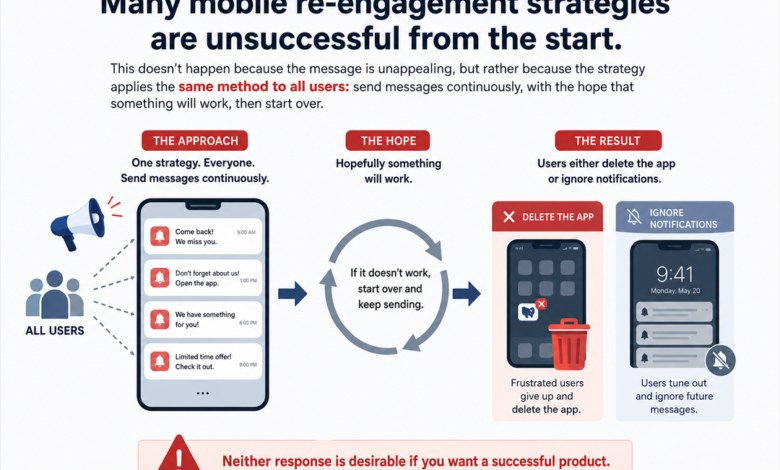
Many mobile re-engagement strategies are unsuccessful from the start. This doesn’t happen because the message is unappealing, but rather because the strategy applies the same method to all users: send messages continuously, with the hope that something will work, then start over. This will make users either delete the app or ignore notifications. Neither response is desirable if you want a successful product.
Start With the Opt-in, Not After it
When a user opens your app for the first time, they have very little knowledge about you. That’s why asking for push permissions right at that moment is almost like trying to get someone to subscribe to your newsletter before they even read a single line you write.
Start with a soft-prompt, an non-system dialog that says what kind of notifications you would like to send, and why they are worth it. Reserve the OS permission prompt for when the user has performed something meaningful: made a purchase, saved something, completed onboarding. By that time they will have the necessary context. They have a reason to say yes.
This method increases opt-in rates, because consent is treated like a feature and not a standard requirement. Users that have opted in after a meaningful interaction are also less likely to revoke it later.
Monetization Doesn’t Have to Compromise the Experience
Publishers using push for revenue generation face a version of the same problem. If the ad experience feels aggressive or misleading, if notifications mimic system alerts or disappear users into irrelevant landing pages, the churn rate will reflect it. The channel cannibalizes itself.
The answer isn’t to avoid monetization. It’s to choose formats and partners that don’t treat mobile real estate as a dumping ground. Mobile push notification ads can generate genuine revenue without degrading the experience when the creatives are clean, the targeting is accurate, and the frequency is capped at levels that feel native to the channel rather than invasive.
User segmentation makes this cleaner. Not every user in your database needs to see every ad. Targeting based on behavior and engagement history keeps ad exposure relevant, which benefits both the user experience and the advertiser’s conversion rate.
Replace Broadcast Logic With Behavioral Triggers
Sending generic “blast” campaigns with the same message to all users at the same time is the quickest way to have your audience start ignoring you. They are easy to implement and consistently have low engagement.
Instead, you should use behavioral triggers. A reminder about an abandoned cart sent 30 minutes after the cart was left makes sense. So does a re-engagement push to a user who hasn’t opened the app in 7 days. The message arrives because something happened, and the user can sense that even if they don’t consciously realize that this message isn’t just part of the noise of spam.
Setting up this type of automation takes more work than a blast campaign but typically, the 2-3X CTR increase is more than enough to offset this. It may take some time to set up but the concept is as simple as it gets: messages that have context get opened; messages that don’t, don’t.
Frequency Limits Aren’t Optional
Based on data from Localytics, nearly half of mobile users will turn off push notifications if a single app regularly sends more than a handful of alerts per week. This isn’t an insignificant percentage that you can afford to lose.
So, establish a firm limit. The norm is probably two daily alerts and ideally fewer but tipping the balance are notifications that users consider important and valuable, or transactional messages. You’re not sending these with the hope of re-engaging a user, they’re an immediate benefit that pull the user back into the app. Our notifications compete for space against those. Those considered less important are the marketing notifications sent with the goal of re-engagement.
Deep Links Close the Loop
Sending a notification that leads a user to the homepage of your app, after you’ve tempted them with a discount on an item they were interested in, is a flawed approach. This user was expecting one action and received another. This difference in expectancy is what causes friction and where user engagement goes to die.
Each notification should have a precise destination. If you are referring to a product, then the link should lead to that product. If you are updating a booking, the link should take the user to the specific booking. Deep linking is not just a technical term, it’s the implicit agreement you make when a user responds to your notification. Measuring up to that agreement decides whether a user will have a good experience after clicking on the notification or whether your re-engagement campaign will be truly engaging.
Retention is Built on What You Don’t Send
It’s easy to fall into the trap of bombarding users with notifications through every possible channel. Short-term metrics may show some positive results, but in reality, mobile users will quickly disable notifications and it’s very difficult to re-engage them once you’ve lost their attention. It is much more costly to try to win them back later than to not overwhelm them in the first place.
A push notification strategy that ensures a better user experience is not about playing it safe, it’s about making smart choices based on what works best for your users.
Get more updates or Stories on Next Magazine