
The Global Homeownership Gap: Why International Buyers Need Smarter Mortgage Solutions in 2026

Global Mobility Is Changing Real Estate Finance
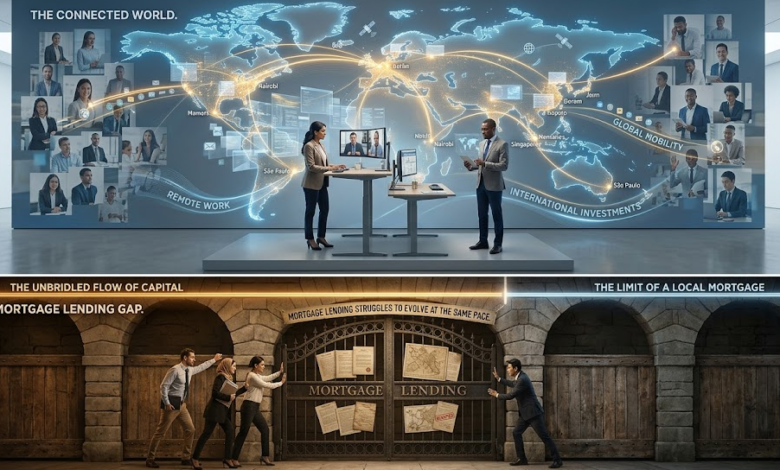
The world is becoming increasingly connected. Professionals work remotely across borders, entrepreneurs operate businesses internationally, and investors regularly diversify their assets across multiple countries. Yet while global mobility continues to accelerate, mortgage lending has struggled to evolve at the same pace.
For many international buyers, purchasing property in the United States remains unnecessarily complicated. Traditional lenders still rely on underwriting models designed for domestic borrowers with local income, local credit histories, and conventional employment structures. As a result, a growing disconnect has emerged between how people earn and invest today and how many banks evaluate mortgage applications.
This challenge has created what many industry professionals now describe as a global homeownership gap.
Companies such as America Mortgages are helping bridge that gap by providing financing solutions specifically designed for U.S. expats, foreign nationals, and internationally mobile borrowers who often fall outside traditional lending guidelines.
Why Traditional Mortgage Lending Is Falling Behind
Today’s international borrower looks very different from the borrower profile many banks were originally built to serve.
Modern buyers frequently include:
- U.S. expats earning foreign income
- International entrepreneurs
- Foreign nationals investing in U.S. real estate
- Remote professionals with multinational income streams
- Global investors purchasing second homes and rental properties
Many of these borrowers have strong financial profiles, substantial assets, and proven income sources. However, they often face challenges when applying for financing because traditional lenders struggle to evaluate income and assets generated outside the United States.
An international investor may have significant liquidity, profitable businesses, and a diversified investment portfolio, yet still encounter obstacles because they lack a U.S. credit score or conventional W-2 income documentation.
The issue is rarely financial strength. The issue is that many lending systems have not adapted to the realities of a global economy.
At the same time, demand for U.S. property continues to grow. American real estate remains attractive because of its stability, legal ownership protections, transparency, and long-term investment potential.
The challenge is no longer demanding. The challenge is access to financing.
The Rise of Smarter Mortgage Solutions
As traditional lenders struggle to accommodate modern borrower profiles, specialized mortgage providers are introducing more flexible underwriting approaches.
Rather than focusing exclusively on domestic documentation requirements, these lenders evaluate a broader financial picture that may include:
- International income sources
- Foreign assets
- Rental property cash flow
- Alternative income documentation
- Cross-border financial strength
This approach better reflects how many globally mobile borrowers earn, invest, and manage wealth.
In many cases, international buyers are not higher-risk borrowers. They simply operate outside the standard frameworks that traditional lending institutions have relied upon for decades.
This shift is helping reshape the mortgage industry in 2026 as more lenders recognize that financial strength cannot always be measured using domestic documentation alone.
Why U.S. Real Estate Continues to Attract Global Buyers
Despite financing challenges, international demand for U.S. property remains strong.
For many investors, American real estate offers a combination of financial security and long-term growth opportunities that can be difficult to replicate elsewhere.
Global buyers continue to be attracted by:
- Long-term appreciation potential
- Stable rental demand
- Portfolio diversification
- Wealth preservation opportunities
- Access to major international markets
For many borrowers, purchasing property is about far more than owning a home. It is a long-term wealth-building strategy designed to create financial security for future generations.
As a result, international buyers increasingly seek lenders that understand global finance rather than applying rigid domestic standards to every application.
This growing demand has accelerated interest in specialized financing programs, including DSCR loans, portfolio lending solutions, Foreign National Mortgages, and mortgage programs designed specifically for borrowers living and working outside the United States.
Refinancing Is Becoming an Important Wealth-Building Tool
In addition to property acquisition, refinancing is playing a larger role in international real estate strategies.
Many investors are choosing to refinance existing U.S. properties to improve cash flow, reduce financing costs, or access equity that can be redeployed into additional investments.
Refinancing has become particularly valuable for:
- Investors managing multiple rental properties
- Borrowers adapting to changing interest-rate environments
- U.S. expats optimizing long-term property portfolios
- International investors leveraging existing equity for expansion
For Americans living abroad, specialized U.S. Expat Mortgage programs are making it easier to maintain and grow U.S. real estate holdings while earning income overseas.
As global investors continue building long-term wealth through U.S. property ownership, refinancing strategies are becoming an increasingly important part of portfolio management.
The Mortgage Industry Is Becoming More International
The mortgage industry is entering a period of significant transformation.
For decades, lending systems focused primarily on local borrowers with straightforward domestic income structures. Today’s economy, however, is increasingly digital, international, and mobile.
Modern borrowers now expect:
- Remote application processes
- Faster underwriting decisions
- Flexible documentation requirements
- Cross-border financing expertise
- Lenders familiar with international transactions
These changing expectations are pushing the mortgage industry toward more adaptable and borrower-focused solutions.
Specialized lenders are no longer viewed as alternatives to traditional banks. In many cases, they are becoming the preferred choice for globally mobile borrowers who require expertise, flexibility, and efficiency.
Why Specialized International Mortgage Programs Matter
Not all international buyers face the same challenges when applying for U.S. financing. A U.S. citizen living overseas has very different documentation requirements from a foreign national purchasing their first American investment property. Yet many traditional lenders continue to apply a one-size-fits-all approach that fails to account for these differences.
Specialized mortgage programs have emerged to address this issue by providing financing solutions tailored to specific borrower profiles. Rather than forcing applicants into conventional underwriting models, these programs are designed around the realities of international income, foreign assets, cross-border banking relationships, and globally mobile lifestyles.
For example, Foreign National Mortgage programs help non-U.S. citizens purchase American real estate without many of the requirements associated with conventional domestic lending. Likewise, mortgage solutions for U.S. citizens living abroad allow expatriates to qualify using eligible foreign income and international financial documentation.
This specialized approach creates greater accessibility for qualified borrowers while helping lenders better evaluate overall financial strength. As international mobility continues to increase, mortgage programs built specifically for global borrowers are becoming an important part of the industry’s evolution, helping more individuals participate in the U.S. housing market and pursue long-term property ownership goals.
Closing the Global Homeownership Gap
The global homeownership gap represents more than a financing challenge. It represents a missed economic opportunity.
When qualified international buyers cannot access mortgage financing, markets lose investment activity, housing demand, and valuable cross-border economic participation. At the same time, borrowers lose access to one of the most effective long-term wealth-building tools available: real estate ownership.
Closing this gap requires lending solutions that recognize how modern borrowers earn income, hold assets, and build wealth.
As international mobility continues to expand, smarter mortgage solutions will play an increasingly important role in shaping the future of global real estate.
The future of mortgage lending will not be defined solely by geography. It will be defined by accessibility, flexibility, and the ability to serve a truly global generation of buyers.
Get more updates or Stories on Next Magazine