

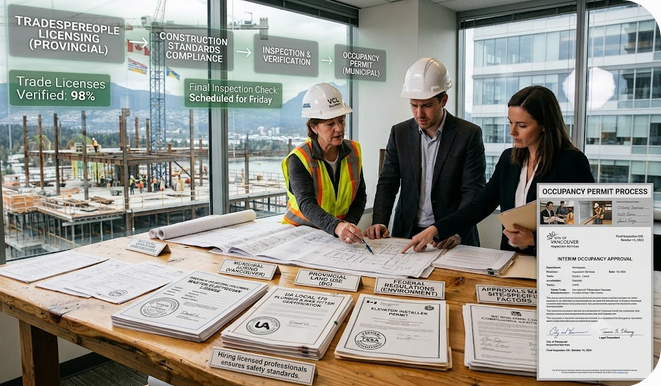
Building an office center in Canada requires more than just a single license. In most cases, there is no special nationwide license that authorizes the construction of office buildings. Instead, developers must comply with a combination of municipal, provincial, territorial, and federal regulations. The exact approvals required depend on the project’s location, size, intended use, and construction characteristics.
While developers typically do not need a special construction license, contractors https://www.commercial-nds.com/our-services/commercial-constructors/ and tradespeople performing the work often require appropriate licenses or certifications. Electricians, plumbers, gas fitters, elevator installers, and other specialized trades are commonly regulated at the provincial or territorial level. Hiring properly licensed professionals helps ensure that construction meets legal and safety standards. Following construction, the building generally cannot be occupied until the relevant authority issues an occupancy permit or approval. Inspectors verify that the completed building complies with the approved plans and applicable safety requirements before allowing tenants to move in.
Documents required for building office center
- The process usually begins with zoning approval. Before construction can begin, the land must be zoned for commercial or mixed-use development that allows office buildings. Municipal planning departments review whether the proposed project complies with local zoning bylaws, which may include restrictions on building height, setbacks, parking requirements, floor area, landscaping, and permitted land uses. If the proposed office center does not comply with existing zoning regulations, the developer may need to apply for rezoning or request planning variances before construction can begin.
- Every province and territory requires a building permit for major commercial construction projects. A permit application usually includes architectural drawings, structural engineering plans, mechanical and electrical designs, fire protection systems, accessibility features, and site plans. Municipal building officials review this documentation to ensure compliance with applicable building codes before issuing construction approval.
- Depending on municipal regulations, large office developments may also require development permits or site plan approval. Local authorities often evaluate the project’s potential impact on surrounding roads, drainage systems, utilities, landscaping, public services, and neighboring properties. In some municipalities, developers must also provide traffic impact studies or stormwater management plans.
- Certain projects require environmental approvals before construction can begin. If the site contains wetlands, protected habitats, contaminated land, or environmentally sensitive areas, additional environmental assessments or permits may be necessary. Requirements vary significantly depending on the location and nature of the proposed development.
- Commercial construction involves complying with regulations related to fire safety, accessibility, and energy efficiency. Building plans must comply with the relevant provincial or territorial building, fire, and accessibility codes. Modern office centers generally must include accessible entrances, elevators, restrooms, emergency exits, fire suppression systems, and energy-efficient building envelopes.
Since regulations vary by province, territory, and municipality, it is advisable to consult experienced architects, engineers, legal advisors, and local planning authorities early in the project to help ensure a smoother approval process and reduce the risk of costly delays.
Get more updates or Stories on Next Magazine