

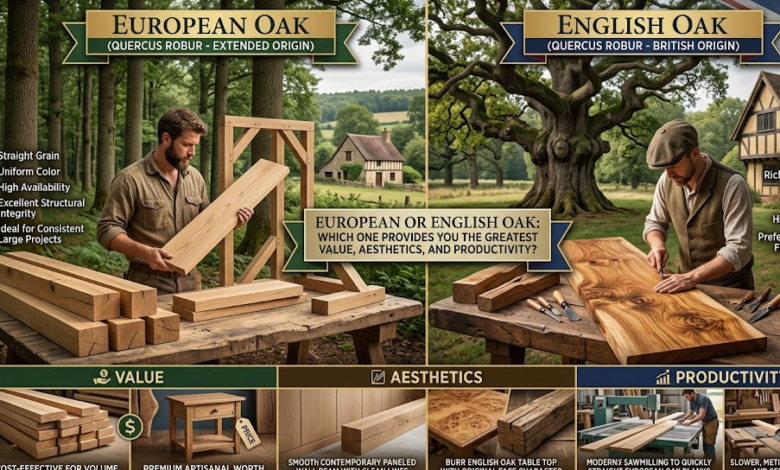
European or English Oak: Which One Provides You the Greatest Value, Aesthetics, and Productivity?
Selecting between European oak and English must be carefully thought through, regardless of whether you will build a timber frame, create custom furniture or use oak beams to enhance your home’s interior.
Both European and English oak are very durable and attractive hardwoods; however, both types of wood will provide you with different characteristics to help complete your project successfully.
Choosing the proper wood is one of the most crucial factors contributing to your project’s success, and experts at H&H Forestry Ltd. emphasize this.
This article will compare European oak with English oak to provide you with enough information to make the right decision for your project.
What Is European Oak?
The growing areas of European oak include many different regions in continental Europe, for example, France, Germany and Croatia. European Oak is used extensively in the construction and structural trades, as well as flooring and furniture making, because of its strength, durability and easy access.
The main characteristics of European Oak Include:
• Light golden-brown colour
• Straight and consistent grain
• Outstanding durability
• Good structural strength
• Readily available in larger quantities
Because of the number of trees that are available for harvesting in Europe; European Oak will be the natural choice for most commercial and large-scale building projects.
What Is English Oak?
British oak originates from England and has been used throughout the history of Britain to build Architecture and Ships. The traditional look and historic value of British oak make this wood an attractive option when making long-lasting purchases.
Some unique qualities of British oak include:
- Rich, warm colours
- Unique grain Pattern
- Natural Character and Texture
- Durable
- Traditional British Look
British oak is commonly used in restoration, custom furniture, and traditional timber framing.
European Oak vs English Oak: Key Differences
Appearance
The most significant contrast in these two types of timber is appearance; European Oak features a straight and uniform grain structure while English Oak tends to also have a more varied grain structure with the presence of knots/protrusions leading to a rustic appearance often associated with traditional timber.
Strength & Durability
Both timber species are also incredibly strong, have very low wear resistance and both can be expected to last decades when treated well. There is little to no variation in the structural performance of both species.
Availability
Due to harvesting from within some of the largest forests located throughout Europe, European Oak is generally much easier to source than the English version due to having smaller cedar stands.
Cost
Generally, European Oak is less expensive than traditional English Oak due to being more readily available. Due to the limited amount of English Oak available coupled with the high demand for use in Heritage and Conservation work, the higher cost associated with English Oak when comparing same-size variables.
Conclusion
When comparing European oak vs English oak, there is no single winner. Both timbers offer outstanding strength, durability, and natural beauty. European oak is often the more practical and cost-effective option, while English oak is prized for its heritage appeal and distinctive character.
By understanding the differences between these two premium hardwoods, you can confidently choose the timber that best suits your project and achieve results that will stand the test of time.
Get more updates or Stories on Next Magazine