

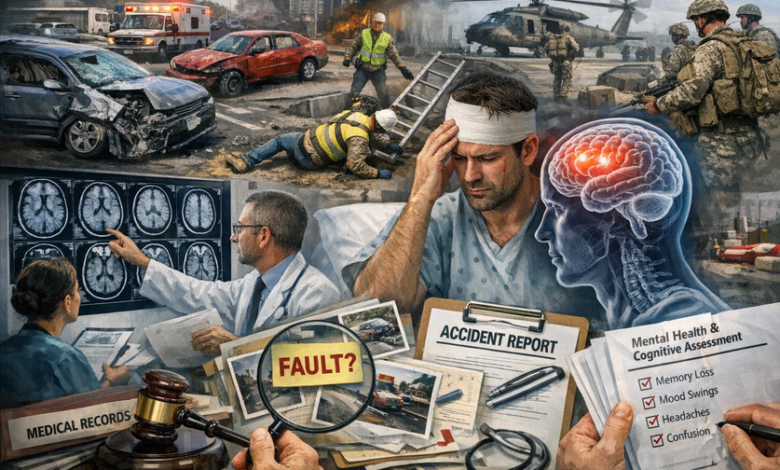
The dense traffic corridors, big tourism and military presence, and active construction zones all contribute to the severe accident risks annually. The traumatic brain injuries typically occur from falls, vehicle crashes, recreational accidents, and workplace incidents. Today, according to medical research, even a mild case of traumatic brain injury can lead to long-lasting emotional, behavioral, and cognitive impairment. Considering the fact that the symptoms are at times invisible and delayed on the normal imaging, establishing fault needs precise investigation, detailed factual analysis, and medical documentation.
Developing the four legal aspects of negligence
To be successful in dealing with challenging claims, the brain injury attorneys need to authenticate the four crucial elements, which are:
- The duty of care.
- The duty breach.
- The causation.
- The potential damages.
They start the process by explaining that the defendant has a legal duty, for instance, the driver’s duty to function safely. After that, they establish that the duty was violated because of inaction or any other negligent action. The lawyers, after this, connect this violation to injuries and then state the quantifiable losses that comprise medical expenses, reduced earning capacity, and permanent rehabilitation requirements.
Establishing causation in cases of traumatic brain injury
Simply put, causation is most often documented in cases of brain injury litigation. The defense teams can argue that the symptoms have stemmed from unrelated events and pre-existing conditions. The lawyers usually counter this by sharing emergency response reports, medical records, neuropsychological assessments, and diagnostic imaging. The leading neurologists, as well as the trained life care planners, constantly testify to explain the way the trauma can directly result in cognitive impairment. Hence, it is necessary to establish a visible medical timeline, thereby connecting the crash to the injury. It is necessary to overcome the disputed causation arguments.
Resorting to technical proof and expert testimony
Expert analysis plays an important role in many complex injury claims. For example, crash reconstruction experts use car damage, skid marks, or office safety protocols to determine that a crash occurred. MRI evaluation by medical professionals, as well as cognitive tests such as functional capacity and long-term prognosis, can help establish that your injuries were caused by the negligence of another person. Utilizing the statistical support from economists who calculate projected lifetime economic loss based upon established statistical models, together with all of this, will help establish that the defendant’s negligence caused you to suffer a substantial, quantifiable loss and/or injury, particularly if memory, concentration, or executive functioning are affected.
Final thoughts
The brain injuries typically need medication management, continuous therapy, and adaptive assistance. The lawyers collect the employment records, vocational evaluation, and wage statements to measure the lost earning capacity. This might also make use of life care plans that outline the future medical costs depending on the clinical projections. Apart from the economic damages, the proof of emotional distress, minimized life quality, and independence loss can help to showcase the entire harm experienced. The compact documentation assists in fair compensation via trial proceedings and settlement negotiations.
If you want to learn more about this, you can browse through hhjtrialattorneys.com and get crucial information. Should you face a similar case in San Diego, it will help you to decide better and move through your legal journey.
Get more updates or Stories on Next Magazine