

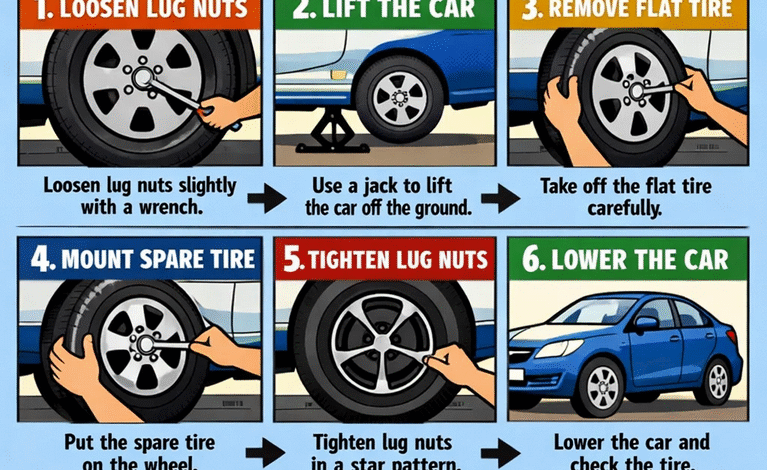
Learning how to change a tire is one of the most essential life skills for any driver. Imagine being stuck on a quiet highway, rain falling, phone battery low, and no roadside help in sight. In moments like these, knowing how to change a tire can turn stress into confidence. This guide is designed for beginners and experienced drivers alike, blending practical instruction with real-world awareness. Whether you drive daily or occasionally, understanding how to change a tire empowers you with safety, independence, and peace of mind. This article explains every step clearly, uses trusted methods, and ensures you feel prepared before an emergency ever happens.
Why Knowing How to Change a Tire Is Still Essential Today
Despite modern vehicles and roadside assistance services, knowing how to change a tire remains critically important. Technology can fail, phone signals can drop, and help can take hours to arrive. Flat tires occur due to sharp objects, worn tread, temperature changes, or improper air pressure, and they rarely happen at convenient times. When drivers understand how to change a tire, they gain immediate control over the situation. This skill also saves money, avoids unsafe waiting conditions, and prevents damage from driving on a flat. Most importantly, it enhances road safety by reducing risky behavior during breakdowns and keeping you calm under pressure.
Essential Tools Required Before You Change a Tire
Before learning how to change a tire, it is important to understand the tools involved. Most vehicles come equipped with basic tire-changing tools, usually stored in the trunk or under the rear cargo area. These include a spare tire, a jack, a lug wrench, and sometimes wheel wedges. Knowing where these tools are located before an emergency is crucial. Additionally, keeping gloves, a flashlight, and a reflective safety vest in your car improves visibility and protection. When drivers prepare in advance, the process of how to change a tire becomes faster, safer, and far less intimidating.
Understanding Tire Types and Spare Tire Limitations
A key part of mastering how to change a tire is understanding the type of spare tire your vehicle uses. Most cars include either a full-size spare, a donut spare, or a run-flat tire system. Full-size spares function like regular tires but add weight. Donut spares are lighter and compact but are designed for temporary use only, often limited to 50 miles at 50 mph. Run-flat tires allow limited driving after a puncture. Knowing these differences ensures you apply the correct expectations after learning how to change a tire, especially when deciding how soon to visit a repair shop.
How to Change a Tire Safely: Step-by-Step Preparation
Safety is the foundation of learning how to change a tire. Begin by pulling over to a flat, stable surface away from traffic. Turn on hazard lights immediately to alert other drivers. Apply the parking brake and place wheel wedges behind the tires opposite the flat. These steps prevent the vehicle from rolling. Before touching any tools, take a moment to breathe and assess your surroundings. A calm mindset improves accuracy and safety. Proper preparation ensures that every step of how to change a tire is executed confidently and without unnecessary risk.
Step 1: Loosening the Lug Nuts Correctly
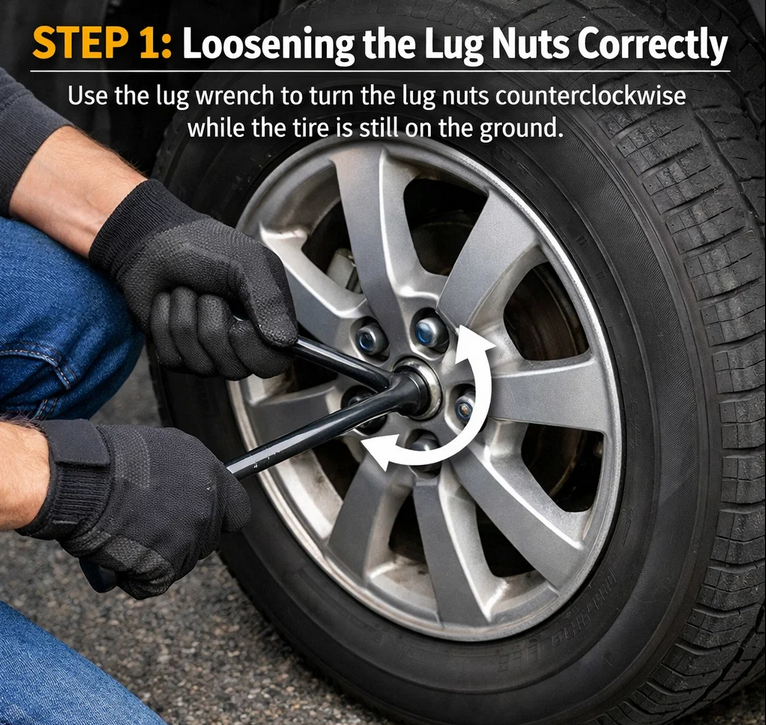
The first mechanical step in how to change a tire is loosening the lug nuts. Use the lug wrench and turn each nut counterclockwise while the tire is still on the ground. This prevents the wheel from spinning. Lug nuts are often tight due to torque and rust, so using body weight or a firm stance helps. Do not remove them completely yet—just loosen them about one turn. This step is critical because attempting it after lifting the car can be dangerous. Proper technique here sets the foundation for successfully completing how to change a tire.
Step 2: Using the Jack to Lift the Vehicle Safely
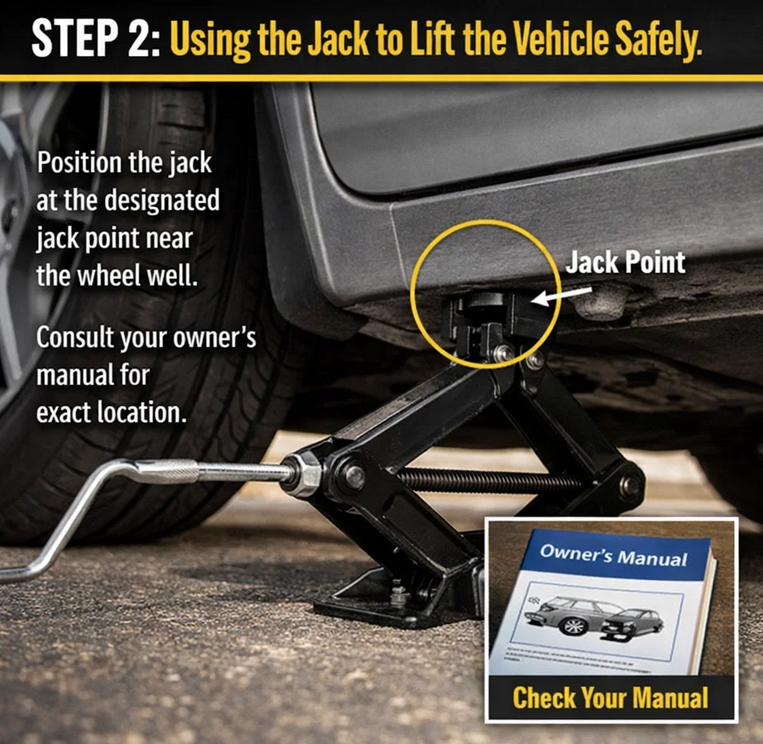
Positioning the jack correctly is one of the most important aspects of how to change a tire. Consult your vehicle’s manual to locate the designated jack point, usually near the wheel well. Place the jack firmly on solid ground and begin raising the vehicle slowly. The flat tire should lift about six inches off the ground. Never place any part of your body under the vehicle while it is supported only by a jack. Careful lifting ensures stability and protects you during the remaining steps of how to change a tire.
Step 3: Removing the Flat Tire with Control
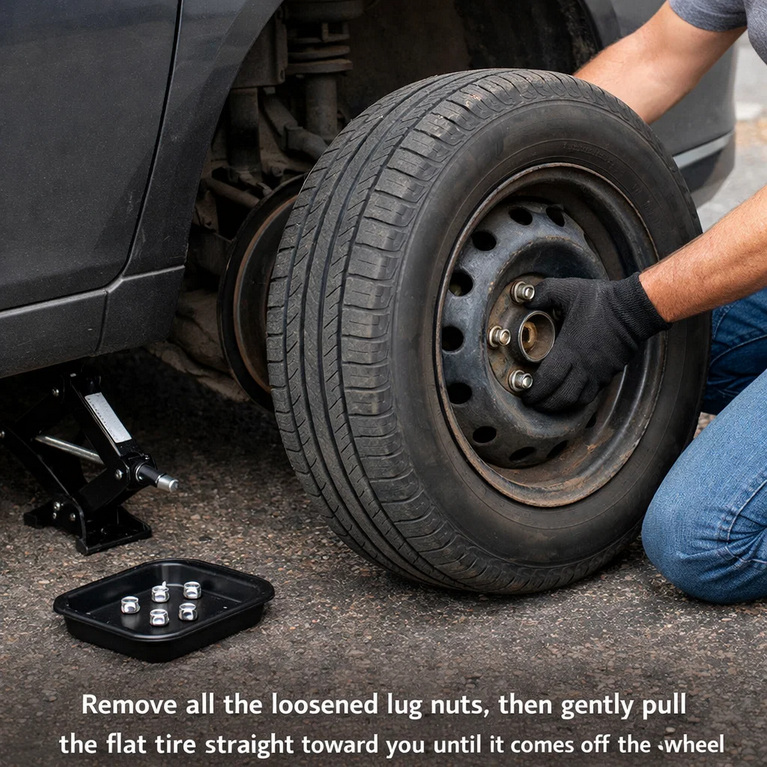
Once the car is elevated, you can fully remove the loosened lug nuts. Keep them in a safe place to prevent loss. Gently pull the flat tire straight toward you until it comes off the wheel hub. This moment often feels significant, especially for first-timers learning how to change a tire. The exposed hub should be clean and free of debris. Removing the tire carefully prevents strain and prepares the area for installing the spare. At this stage, confidence grows as the process of how to change a tire becomes clearer and more manageable.
Step 4: Mounting and Securing the Spare Tire
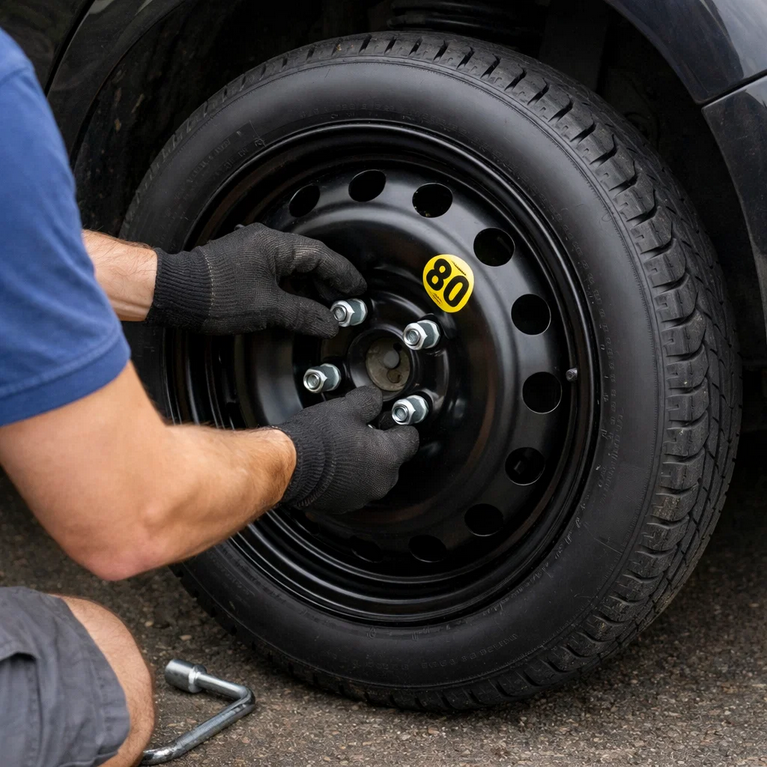
Align the spare tire with the wheel bolts and push it gently onto the hub until it sits flush. Hand-tighten the lug nuts in a star or crisscross pattern to ensure even pressure. This pattern prevents warping and ensures stability. Lower the car slightly so the spare touches the ground, then use the lug wrench to tighten the nuts firmly. Avoid over-tightening. This step is essential in how to change a tire, as improper installation can lead to vibration or wheel detachment while driving.
Step 5: Lowering the Vehicle and Final Tightening
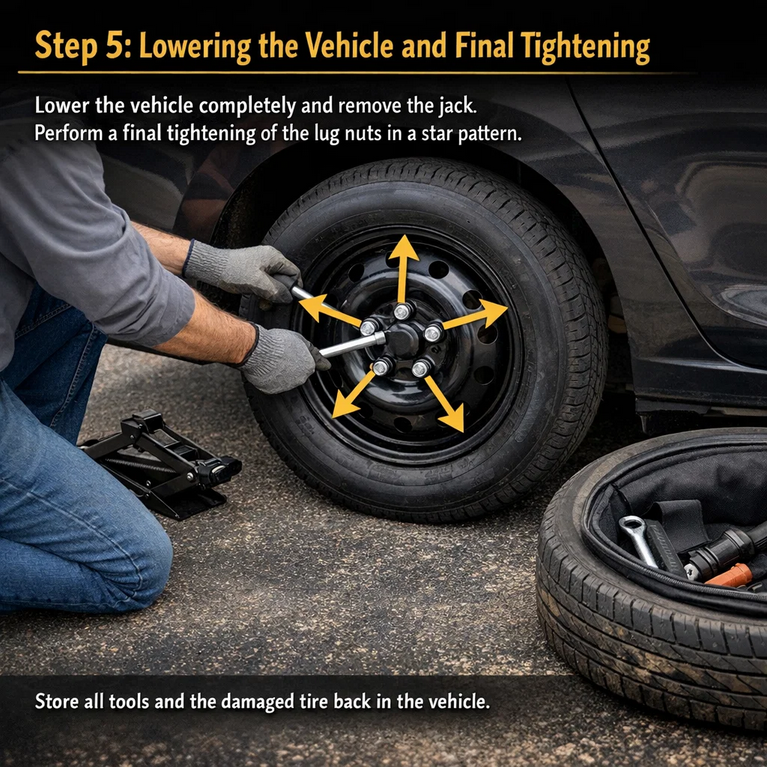
Slowly lower the vehicle completely using the jack, then remove it. Once the car is fully grounded, perform a final tightening of the lug nuts using the same star pattern. This ensures maximum security. Check that the spare tire appears straight and stable. Completing this step correctly finalizes the physical process of how to change a tire. Take a moment to store all tools and the damaged tire safely in your vehicle. Organization after the repair prevents future issues and reinforces good habits for handling roadside emergencies.
What to Do Immediately After You Change a Tire
Understanding how to change a tire does not end once the spare is installed. If you are using a donut spare, drive cautiously and avoid highways when possible. Head to the nearest tire repair or replacement center promptly. Even full-size spares should be inspected soon. Check the spare’s air pressure within 24 hours. These post-change actions ensure long-term safety. Drivers who respect these limitations demonstrate a complete understanding of how to change a tire responsibly and protect their vehicle from further damage.
Common Mistakes to Avoid When Changing a Tire
Many drivers know the theory of how to change a tire but make avoidable mistakes. These include forgetting to turn on hazard lights, jacking the car on uneven ground, or tightening lug nuts improperly. Another common error is ignoring the speed limits of temporary spares. Avoid rushing, as panic often leads to injury or damage. Awareness of these mistakes strengthens your overall ability to execute how to change a tire smoothly. Practice and preparation significantly reduce the likelihood of errors during real emergencies.
How Weather and Road Conditions Affect Tire Changes
Weather plays a major role in how to change a tire safely. Rain, snow, or extreme heat can affect visibility, traction, and physical comfort. In bad weather, it is even more important to position your car away from traffic and wear reflective gear. Wet or icy surfaces may require additional wheel wedges. Understanding environmental challenges prepares you mentally and physically. Drivers who adapt their approach based on conditions demonstrate advanced knowledge of how to change a tire and prioritize personal safety above all else.
Teaching New Drivers How to Change a Tire Confidently
Passing on knowledge of how to change a tire is an important responsibility, especially for parents and driving instructors. Teaching this skill early builds confidence and reduces fear of breakdowns. Demonstrate the process step by step, allow hands-on practice, and explain safety reasons behind each action. When new drivers understand not just what to do, but why, they retain the knowledge longer. Empowering others with the ability to handle emergencies reinforces the real-world value of knowing how to change a tire.
Conclusion: Mastering How to Change a Tire Builds Lifelong Confidence
Knowing how to change a tire is more than a mechanical skill—it is a symbol of independence and preparedness. From understanding tools to executing each step safely, this guide provides everything needed to handle a flat tire with confidence. Emergencies are unpredictable, but your response does not have to be. By practicing and remembering these steps, you ensure safety for yourself and others. Mastering how to change a tire transforms a stressful situation into a manageable task and reinforces your confidence every time you get behind the wheel.
Frequently Asked Questions (FAQs)
1. How long does it take to learn how to change a tire?
Most people can learn how to change a tire in under 30 minutes with practice and clear instructions.
2. Is it safe to drive long distances on a spare tire?
No. Temporary spares are designed for short distances only and should be replaced quickly.
3. Can I change a tire without a jack?
No. A proper jack is essential for safely lifting the vehicle during how to change a tire.
4. How often should I check my spare tire?
Check the spare tire’s air pressure every 3–6 months to ensure readiness.
5. What if lug nuts are too tight to remove?
Use steady pressure with your body weight, but never jump on the wrench.
6. Should I practice how to change a tire before an emergency?
Yes. Practicing in a safe environment improves speed, confidence, and safety.
Get more updates or Stories on Next Magazine