
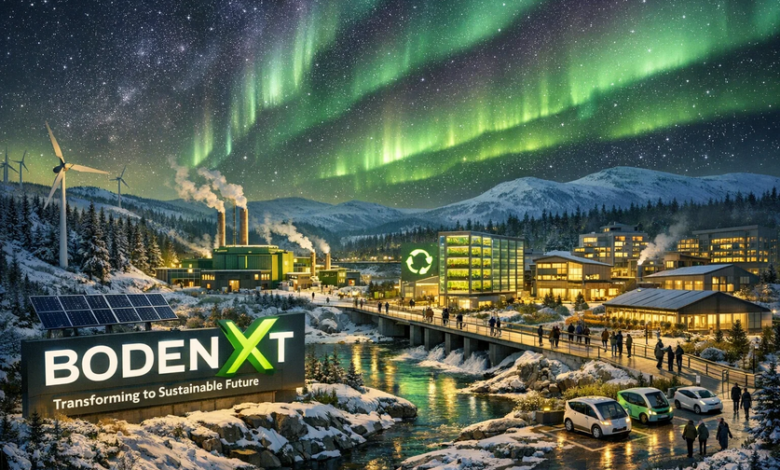
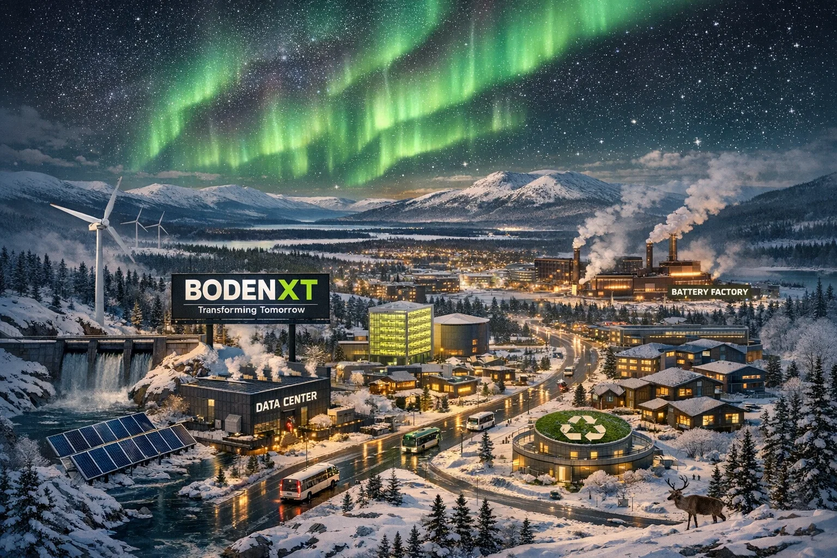
In the far north of Sweden, where forests stretch endlessly and winter nights glow with northern lights, a quiet municipality is rewriting the future of sustainable development. Bodenxt is not just a project or a slogan—it is a bold transformation platform turning Boden into a global model for green industry, circular economy, and smart urban growth. What began as a response to major industrial investments has evolved into one of Scandinavia’s most ambitious sustainability initiatives.
This article explores the origins, structure, impact, and future of Bodenxt, offering a detailed look at how a small northern town is becoming the green heart of Europe.
What Is Bodenxt?
At its core, Bodenxt is the strategic development platform launched by the Municipality of Boden to coordinate the town’s rapid green transition. The name reflects “Boden next,” signaling a new era of industrial innovation, sustainable living, and long-term societal transformation.
Rather than focusing solely on heavy industry, the platform integrates housing, education, infrastructure, and environmental protection into one unified strategy. It ensures that growth benefits residents, businesses, and future generations alike. With northern Sweden attracting approximately 1,400 billion SEK in green reindustrialization investments, the initiative acts as the central coordinator managing these sweeping changes.
Boden’s location in Norrbotten County, rich in renewable electricity from hydropower and wind energy, makes it uniquely positioned for energy-intensive green industries. The platform leverages this advantage to create a balanced ecosystem of innovation and sustainability.
The Origins of Bodenxt
The foundation of Bodenxt can be traced back to the 2020 global pandemic, when municipal leadership adopted agile crisis management methods. Under the guidance of key leaders such as Mats Berg, the municipality learned to collaborate across departments and respond quickly to unexpected challenges.
When H2 Green Steel—now rebranded as Stegra—announced plans to build a massive green steel plant in Boden, the municipality was prepared. Instead of reacting slowly, officials accelerated planning processes and formalized a structure that could handle rapid expansion.
By 2022, the transformation platform was officially structured to transcend traditional municipal boundaries. It incorporated:
- Municipal companies
- Private investors
- Educational institutions
- Regional authorities
- International partners
This cross-sector collaboration allowed Boden to move decades ahead in development within just a few years.
The Five Core Sub-Projects of Bodenxt
The strength of the platform lies in its structured approach. It operates through five interconnected sub-projects that ensure balanced development.
Skills Supply and Workforce Development
Industrial expansion demands skilled talent. This sub-project focuses on bridging the gap between education and emerging green industries. Institutions such as Lärcentrum and Boden Business Park collaborate with companies to provide targeted training programs.
Key workforce initiatives include:
- Upskilling in hydrogen technology and green steel production
- Training in AI and automation for smart industry
- Apprenticeships tied directly to industrial partners
- International recruitment campaigns
With Stegra projected to employ approximately 2,000 workers by 2030, workforce readiness is critical. The Boden Sustainability Center, led by Christine Musembi, also ensures that growth remains socially inclusive.
Living and Housing Expansion
Rapid industrialization requires adequate housing and livable communities. This sub-project focuses on creating vibrant, energy-efficient neighborhoods designed to attract both Swedish and international talent.
Urban planning includes:
- Affordable residential developments
- Smart district heating powered by industrial surplus heat
- Green spaces and recreational areas
- Family-friendly infrastructure
Population growth projections indicate thousands of new residents by 2030. The strategy ensures that housing development keeps pace with job creation.
Business Development and Innovation Ecosystem
Boden Industrial Park is a central pillar of economic expansion. Covering approximately 550 hectares, it is one of Sweden’s largest industrial areas dedicated to sustainable development.
The ecosystem supports:
- Cleantech startups
- Sustainable food production companies
- Green manufacturing facilities
- Hydrogen-based energy businesses
One notable example is Agtira’s 285 million SEK greenhouse project with Greenfood, using surplus industrial heat for year-round vegetable cultivation. This approach strengthens food self-sufficiency while reducing energy waste.
Infrastructure Above and Below Ground
Infrastructure forms the backbone of long-term success. Major investments include transport networks, electricity grids, and digital connectivity systems.
Highlights include:
- A new six-kilometer railway completed ahead of schedule in 2026
- Construction of 10 bridges to improve logistics access
- Expansion of renewable power capacity
- Installation of resilient water and fiber networks
Underground systems are equally important, ensuring climate resilience and efficient energy distribution.
Sustainable Energy and Circular Systems
A defining characteristic of Bodenxt is its circular economy philosophy. Waste from one process becomes input for another. Industrial surplus heat powers residential areas and greenhouses. Hydrogen production fuels both steelmaking and potential exports.
This integrated model reduces emissions while maximizing resource efficiency.
Stegra: The Industrial Catalyst
No discussion of Bodenxt would be complete without examining Stegra, formerly known as H2 Green Steel. The facility represents one of Europe’s largest green steel investments.
The plant aims to produce 5 million tonnes of steel annually using hydrogen instead of coal, reducing CO₂ emissions by approximately 95% compared to traditional steelmaking. The phased rollout includes scrap-based production in 2026, followed by full hydrogen-based operations by 2027–2028.
Funding milestones include:
- €100 million early support
- €37 million Swedish government grant in 2025
- Secured energy agreements totaling 6 TWh per year
The hydrogen plant associated with the facility is expected to be one of the largest in Europe, positioning Boden as a key player in the Nordic hydrogen economy.
Environmental and Economic Impacts
The environmental impact of Bodenxt is substantial. Green steel production alone represents one of the most significant industrial decarbonization efforts in Europe. Combined with renewable electricity and circular infrastructure, the municipality aims for climate neutrality by 2030, in line with the Viable Cities partnership.
Economic benefits include:
- Thousands of direct and indirect jobs
- Regional investment of approximately 1,400 billion SEK
- Increased food and energy self-sufficiency
- Attraction of global investors and researchers
Socially, the transformation encourages inclusive development through partnerships with organizations such as Naturskyddsföreningen (Swedish Society for Nature Conservation).
Latest Developments in 2026
As of February 2026, progress remains strong. The new railway is nearing operational readiness, supporting both industrial logistics and hydrogen transport. Construction at Stegra continues at pace, with production lines expected to activate within the year.
The Agtira-Greenfood greenhouse project is scaling operations, demonstrating how industrial heat can support sustainable agriculture. Meanwhile, the municipality continues hosting Bodenxt Talks, a web-based discussion platform exploring hydrogen, AI, and green urban design.
These developments indicate that the transformation is not theoretical—it is actively unfolding.
Community Engagement and Public Dialogue
One of the defining strengths of Bodenxt is its focus on dialogue and transparency. Through Bodenxt Talks, experts and citizens engage in discussions about sustainability, innovation, and future planning.
Community engagement initiatives include:
- Public forums and workshops
- Educational partnerships with local schools
- Business networking events
- Open discussions on environmental impact
Residents can contact the municipality via kommunen@boden.se or call +46 921 620 00 for further information. This open communication fosters pride and shared ownership of the green transformation.
The Long-Term Vision for Bodenxt
Looking ahead to 2030 and beyond, the vision extends far beyond steel production. The municipality envisions a fully integrated, climate-neutral city with:
- Zero-emission industries
- Circular food production systems
- Smart mobility solutions
- Advanced battery storage technologies
- Green fuel export networks
There are discussions of expanding hydrogen infrastructure and strengthening cross-border energy cooperation across Scandinavia. The long-term ambition is for Boden to serve as a global model for sustainable industrial towns.
Why Bodenxt Matters Globally
While rooted in northern Sweden, the implications of Bodenxt reach far beyond regional borders. Heavy industries account for a significant share of global emissions. By demonstrating that steel production can be decarbonized at scale, the initiative provides a replicable model.
Key global lessons include:
- Aligning municipal planning with industrial strategy
- Leveraging renewable energy advantages
- Prioritizing skills development alongside infrastructure
- Integrating community engagement into industrial expansion
Small municipalities worldwide can draw inspiration from Boden’s proactive approach.
Conclusion
Bodenxt represents one of the most ambitious green transformation initiatives in Scandinavia. From agile pandemic-era planning to becoming a hub for green steel and hydrogen production, Boden has accelerated its development by decades. The integration of housing, skills training, infrastructure, and environmental stewardship ensures that growth remains sustainable and inclusive.
As construction advances and industrial production begins, the municipality continues proving that small towns can lead global change. The green heart of northern Sweden is not just imagining the future—it is building it.
Frequently Asked Questions (FAQs)
1. What exactly is Bodenxt?
Bodenxt is the Municipality of Boden’s coordinated platform for managing its green industrial and societal transformation.
2. How is Stegra connected to the initiative?
Stegra’s green steel plant acts as the main industrial driver, accelerating economic growth and emission reductions.
3. When will green steel production begin?
Initial production using scrap steel begins in 2026, with full hydrogen-based production planned for 2027–2028.
4. What are the main focus areas?
The five core areas include skills development, housing, business growth, infrastructure, and circular energy systems.
5. Is Boden climate-neutral yet?
The goal is to achieve climate neutrality by 2030, with significant progress already underway.
6. How large is Boden Industrial Park?
It spans approximately 550 hectares, making it one of Sweden’s largest sustainable industrial parks.
7. How can businesses or residents get involved?
Interested parties can contact the municipality directly or participate in public forums such as Bodenxt Talks.
Get more updates or Stories on Next Magazine