

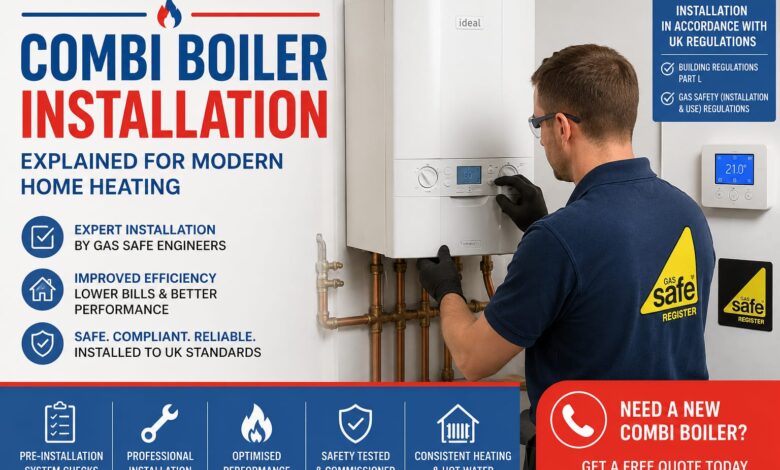
Upgrading to a modern combi boiler can transform how a home uses heating and hot water. A correctly planned installation can improve comfort, remove the need for bulky tanks, reduce wasted energy and create a simpler heating setup that suits many flats, terraced homes and medium-sized properties. For homeowners reading about Combi Boiler Installation Explained, the most important point is that the quality of the installation matters just as much as the boiler model itself.
A combi boiler is compact, responsive and convenient, but it still needs careful assessment before fitting. Water pressure, gas supply, radiator condition, pipework, flue position, condensate drainage and heating controls all affect how well the final system performs. A rushed installation may work at first but can later cause pressure loss, poor hot water flow, noisy radiators or expensive breakdowns.
This guide explains how combi boiler installation works in practical terms, what should be checked before work begins, which homes are most suitable and how homeowners can make a better long-term decision when replacing an older heating system.
What Is a Combi Boiler?
A combi boiler, short for combination boiler, is a single appliance that provides central heating and domestic hot water without normally needing a separate hot water cylinder or cold water tank. This makes it a popular option in properties where space is valuable and where homeowners want a cleaner, more streamlined system.
Instead of storing hot water, the boiler heats water directly from the mains supply when a tap or shower is opened. For heating, it circulates hot water through radiators or underfloor heating circuits. This on-demand approach reduces standing heat loss because the system is not constantly keeping a cylinder of water warm.
Modern combi boilers often include advanced modulation, digital controls and efficiency features that allow the appliance to adjust its output according to demand. When paired with good controls and a clean heating system, this can support lower fuel use and more consistent indoor comfort.
How Combi Boilers Work in Everyday Use
When someone turns on a hot tap, cold mains water enters the boiler and passes through a heat exchanger. The boiler heats the water rapidly and sends it directly to the outlet. When the tap is turned off, the boiler stops producing hot water.
When the property needs central heating, the boiler heats water within the sealed heating circuit and pumps it around the radiators. The thermostat and room controls tell the boiler when to fire, reduce output or switch off. This is why correct control setup is essential; even an efficient boiler can waste energy if the controls are poorly configured.
Because hot water is produced instantly, combi performance depends strongly on incoming mains pressure and flow rate. A powerful boiler cannot overcome a weak water supply. This is one reason a pre-installation survey is so important.
Main Benefits of a Combi Boiler Installation
A well-installed combi boiler can offer several practical advantages. The most obvious is space saving. Removing an old cylinder or cold water tank can free up cupboards, loft space or utility areas, which is especially useful in London properties where storage is often limited.
Combi boilers can also improve convenience. Hot water is available on demand, so there is no need to wait for a cylinder to reheat after several showers or baths. For many households with moderate hot water demand, this is one of the biggest day-to-day benefits.
Energy efficiency is another reason many homeowners choose a combi system. Modern condensing boilers recover more heat from combustion gases than older non-condensing models. This can reduce wasted heat and improve overall system performance, particularly when the installation includes correct controls, radiator balancing and system cleaning.
Is a Combi Boiler Right for Every Property?
Combi boilers are not automatically the best choice for every home. They are often ideal for flats, apartments, smaller houses and medium-sized homes with one bathroom or moderate hot water demand. They can also be useful where removing tanks would create extra storage space.
However, larger homes with multiple bathrooms may need a different solution. If two showers, a bath and kitchen taps are likely to be used at the same time, a system boiler with a hot water cylinder may provide stronger performance. A combi boiler can only heat hot water as it flows through the appliance, so simultaneous demand must be considered carefully.
Before recommending a combi boiler, an engineer should assess the number of bathrooms, occupancy level, incoming water flow, radiator load, insulation standard and future plans for extensions or bathroom upgrades.
Choosing the Correct Boiler Size
Boiler size should never be chosen by guesswork. If the boiler is too small, it may struggle to meet heating or hot water demand. If it is too large, it may cycle on and off too often, increasing wear and reducing efficiency.
For combi boilers, sizing involves both heating output and hot water output. A small flat may need only a lower-output model, while a larger home with higher shower demand may require a stronger hot water flow rate. The right choice depends on real household usage, not simply the number of bedrooms.
Important sizing factors include the number of radiators, number of bathrooms, water pressure, flow rate, insulation, pipework condition and daily hot water habits. A proper heat requirement assessment helps prevent underperformance and unnecessary energy waste.
What Engineers Check Before Installation
A professional survey should take place before the installation date. This stage helps identify issues that could affect safety, efficiency or future reliability. It also allows the engineer to recommend the most suitable boiler location and output.
The survey normally includes checks on gas pipe sizing, flue route, water pressure, mains flow rate, condensate drainage, radiator condition, existing controls and the cleanliness of the heating system. In older homes, pipework condition and sludge build-up should be reviewed carefully.
If problems are found before installation, they can often be corrected at the same time. This reduces the risk of fitting a new boiler onto a system that is already restricted, contaminated or poorly balanced.
The Installation Process Step by Step
The first practical stage is safely isolating and removing the existing boiler. If the property is changing from a conventional system to a combi boiler, the old cylinder and water tanks may also be removed if they are no longer required.
Next, the engineer prepares the new position. This may involve adapting pipework, fitting a compliant flue, installing or upgrading condensate drainage and ensuring the wall or cupboard location is suitable. The boiler is then connected to the gas supply, mains water, hot water pipework, central heating circuit, electrical controls and flue system.
After fitting, the system is filled, pressurised, checked for leaks and tested. Commissioning is then completed according to the manufacturer’s instructions. This confirms combustion performance, safety operation, pressure stability, hot water delivery and heating function.
Why System Cleaning Is So Important
One of the most common installation mistakes is connecting a new boiler to a dirty heating system. Older pipework and radiators can contain sludge, rust particles and debris. If this material enters a new boiler, it can damage the pump, block the heat exchanger and reduce efficiency.
Depending on the condition of the system, an engineer may recommend chemical cleaning, power flushing, inhibitor treatment and the installation of a magnetic filter. These measures help protect the new boiler and improve circulation through the radiators.
A clean system heats more evenly, runs more quietly and places less strain on the appliance. For long-term reliability, system cleaning should be treated as part of the installation rather than an optional extra.
Heating Controls and Smart Efficiency
A new combi boiler performs best when it is paired with suitable controls. Programmable thermostats, smart controls, thermostatic radiator valves and zoning can all help reduce wasted heat.
Good controls allow homeowners to heat rooms only when needed and avoid running the boiler unnecessarily. This can be particularly useful for people with changing schedules or properties where some rooms are used more than others.
Correct control setup can also improve comfort by reducing temperature swings and helping the boiler operate more smoothly. A modern boiler with poor controls may still waste energy, so controls should be considered during the installation planning stage.
Common Installation Problems to Avoid
Poor installation can shorten the lifespan of a boiler and reduce performance. Common mistakes include incorrect sizing, poor flue positioning, inadequate gas pipework, unsuitable condensate drainage, skipping system flushing, poor radiator balancing and ignoring low mains flow rate.
These issues may not always be obvious immediately. Over time they can lead to pressure loss, hot water problems, noisy operation, higher bills or repeated faults. Manufacturer warranties may also be affected if installation standards are not followed.
Using qualified professionals reduces these risks and ensures the boiler is fitted in line with safety requirements and manufacturer guidance.
When an Old Boiler Should Be Replaced
Replacement may be more sensible than repeated repairs when a boiler is old, inefficient or unreliable. Warning signs include frequent breakdowns, rising energy bills, leaks, corrosion, repeated pressure loss, noisy operation, slow radiator warm-up or difficulty finding replacement parts.
Boilers over 10 to 15 years old may also lack the efficiency and control features found in newer models. While age alone does not always mean replacement is necessary, ongoing repair costs should be compared with the benefits of a modern system.
A new combi boiler can improve performance, but only when the wider heating system is assessed properly and any underlying issues are corrected.
Practical Suitability at a Glance
| Property Factor | Combi Boiler Suitability | Important Note |
| Small flat or apartment | Often suitable | Good option where space is limited and hot water demand is moderate. |
| Multiple bathrooms | May be limited | A system boiler may perform better if several outlets are used together. |
| Low mains water pressure | Needs assessment | Incoming flow rate can limit hot water performance. |
| Older heating system | Possible | Pipework, sludge and radiator condition should be checked before fitting. |
| Smart controls required | Suitable | Modern combi boilers work well with efficient heating controls. |
Professional Advice for Local Homes
Heating requirements can vary significantly between modern apartments, converted flats, terraced houses and older properties. Advice from Fulham Plumbers can be useful when a property has limited space, older pipework, mixed radiator sizes or uncertain water pressure. A local assessment helps match the boiler to the building rather than relying only on standard output ranges.
Final Thoughts
A combi boiler can be an excellent upgrade for many homes, offering compact design, on-demand hot water and improved efficiency compared with older systems. However, the success of the installation depends on careful planning, correct sizing, clean pipework, suitable water pressure, compliant flue positioning and proper commissioning.
Homeowners should treat boiler installation as a full heating system upgrade rather than a simple appliance swap. When the survey, installation and aftercare are handled correctly, the result is a safer, cleaner and more efficient system that supports reliable heating for years.
For homeowners looking for reliable Plumbers in Fulham, professional installation and ongoing maintenance can help protect comfort, improve performance and reduce the risk of avoidable boiler problems.