

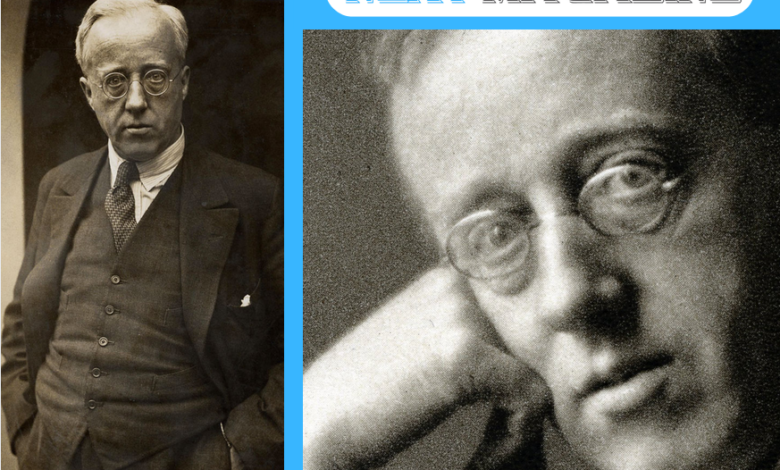
Gustav Holst is one of the most influential English composers of the early 20th century, celebrated for his innovative orchestral works and educational contributions. Best known for his iconic suite The Planets, Holst’s music captures cosmic grandeur, mystical influences, and a distinct English voice. His journey—from a frail child learning the trombone in Cheltenham to a visionary composer shaping orchestral music worldwide—is a story of perseverance, creativity, and deep spiritual and musical exploration. This biography explores his life, works, and enduring legacy.
| Category | Details |
|---|---|
| Full Name | Gustavus Theodore von Holst |
| Common Name | Gustav Holst |
| Date of Birth | September 21, 1874 |
| Place of Birth | Cheltenham, Gloucestershire, England |
| Date of Death | May 25, 1934 |
| Place of Death | London, England |
| Nationality | English |
| Occupation | Composer, Teacher, Trombonist |
| Education | Royal College of Music, London |
| Instrument | Trombone, Piano |
| Spouse | Isobel Harrison (married 1901) |
| Children | Imogen Holst |
| Health Issues | Asthma, poor eyesight, neurasthenia |
| Famous Works | – The Planets (1914–1916)– The Hymn of Jesus (1917)– Egdon Heath (1927)– St. Paul’s Suite (1913)– First Suite in E-flat for Military Band (1909)– Second Suite in F for Military Band (1911) |
| Major Roles | Music director at St. Paul’s Girls’ School (1905–1934) and conductor at Morley College (1907–1934) |
| Musical Style | Eclectic orchestration, folk influences, mystical inspiration, modal harmonies, economical and precise scoring |
| Influences | Ralph Vaughan Williams, Bach, Wagner, Stravinsky, Ravel, English folk music, Hindu philosophy |
| Legacy | Revolutionized English orchestral music, inspired modern composers and film music, preserved by Holst Society and Holst Foundation |
| Notable Students | Imogen Holst (daughter), and generations of musicians at St. Paul’s and Morley College |
| Awards/Recognition | Widely celebrated for orchestral innovation, enduring influence of The Planets in classical and popular music |
| Personality Traits | Humble, introspective, meticulous, visionary, dedicated to teaching |
| Key Philosophy | “Never compose anything unless the not-composing becomes a positive nuisance.” |
Early Life and Family Roots
Gustav Holst was born Gustavus Theodore von Holst on September 21, 1874, in Cheltenham, Gloucestershire, England. His father, Adolph Holst, a Swedish-born organist and pianist, nurtured Gustav’s early musical education, giving him piano lessons from the age of four. His mother, Clara Lediard, from an English family, passed away when he was only eight, leaving a lasting emotional impact that influenced his introspective and sometimes somber compositions.
Raised alongside his sister Nina, Holst endured chronic poor health, including asthma and weak eyesight. These limitations forced him to abandon the violin in favor of the trombone, an instrument that would later define his orchestral insight. His father’s guidance exposed him to German Romanticism, Wagnerian operas, and English folk music, fostering an eclectic foundation. By his teenage years, he was already composing small works, showing remarkable sensitivity to melody and harmony.
Education at the Royal College of Music
In 1893, at the age of 19, Gustav Holst won a scholarship to the Royal College of Music (RCM) in London. There, he studied composition under Charles Villiers Stanford, a strict mentor whose emphasis on counterpoint and orchestration sharpened Holst’s technical expertise. To support himself, he played trombone in theater orchestras, gaining practical experience that would inform his orchestral writing.
During his RCM years, Holst befriended Ralph Vaughan Williams, a lifelong companion who shared his interest in English folk music and modal harmonies. The pair collected songs from the countryside, embedding them into their compositions. Stanford’s critique—labeling some of Holst’s early works as “too full of Schumann”—pushed him toward originality. By the time he graduated in 1898, Holst had developed a disciplined, economical orchestration style that would distinguish him from his lush Romantic contemporaries.
Early Career: Trombonist and Teacher
After graduation, Holst toured as a trombonist from 1898 to 1900, enduring grueling schedules that tested his fragile health. Early works, such as the opera Sita (1899–1906), reflected his fascination with Hindu philosophy, inspired by translations of Sanskrit texts.
In 1905, Holst became music director at St. Paul’s Girls’ School, a role he cherished until his death. Here, he composed works like the St. Paul’s Suite, balancing accessibility and sophistication. By 1907, he also directed choirs at Morley College, fostering community music among working-class adults. Holst’s teaching emphasized exploration and joy over rote learning, introducing folk songs and modal harmonies to students, while providing financial stability that allowed him to compose freely.
Musical Influences and Style
Holst’s music reflects a broad spectrum of influences. He drew inspiration from Maurice Ravel’s clarity, Igor Stravinsky’s rhythmic ingenuity, and the modal richness of English folk music. Holst also studied Sanskrit texts, incorporating mystical and philosophical elements into works such as The Hymn of Jesus (1917).
His orchestration is known for economy and precision, avoiding the excessive Romantic lushness of contemporaries while producing vivid emotional impact. Holst admired Bach’s polyphony and Debussy’s colors, blending them with folk tunes and mystical themes. This combination created a distinctive, forward-looking style that anticipated aspects of modernism.
The Masterpiece: The Planets
Between 1914 and 1916, Holst composed his magnum opus, The Planets, a seven-movement orchestral suite depicting the astrological personalities of each planet. Mars bristles with martial intensity, Venus exudes serenity, Jupiter radiates jubilant energy, and Neptune fades into ethereal mystery. Premiered in 1919 at Queen’s Hall under Adrian Boult, the suite gained immediate acclaim.
Holst’s orchestration demonstrated visionary economy, combining polytonality, ostinatos, and innovative textures. Though Holst himself downplayed the work—famously lamenting that people whistled Jupiter at rugby matches—the suite remains a staple of orchestral repertoire, influencing generations of composers, film scores, and even popular music.
Other Major Works and Innovations
Beyond The Planets, Holst composed a wide range of works:
- The Hymn of Jesus (1917): Choral-orchestral masterpiece with Gnostic influences.
- Egdon Heath (1927): Orchestral tribute to Thomas Hardy’s moors.
- Choral Symphony (1923–24): Innovative use of textless voices.
- At the Boar’s Head (1925): Opera blending folk elements with modernism.
- First and Second Suites for Military Band (1909–1911): Elevated brass and wind instruments to orchestral heights.
- Fugal Concerto (1923) and Brook Green Suite (1930): Chamber works reflecting teaching experience.
His later works, such as Hammersmith (1930) and settings of Sanskrit hymns, reveal his experimental side, integrating Eastern spirituality and modern orchestration techniques.
Teaching Legacy and Community Impact
Holst’s influence extended far beyond composition. At St. Paul’s Girls’ School, he created orchestras capable of professional-level performance, while at Morley College, he directed choirs that performed ambitious works like The Ode to Death (1919). Holst believed in the power of music to unite communities, arranging folk songs and large-scale pageants.
Many students, including his daughter Imogen Holst, continued his legacy, preserving and promoting his works. Holst’s pedagogical approach emphasized intuition, emotional expression, and accessibility, shaping generations of English musicians.
Personal Life, Health Struggles, and Later Years
Holst married Isobel Harrison, a former pupil, in 1901. Their daughter, Imogen Holst, became a composer and biographer of her father. Despite familial stability, Gustav struggled with persistent health issues, including neurasthenia and later complications from ulcer surgery.
He remained active professionally, conducting, composing, and teaching until his death. Holst passed away on May 25, 1934, in London, aged 59. His ashes were interred in Chichester Cathedral, honoring a life dedicated to music and education.
Legacy in Modern Music
Holst’s impact resonates in classical, film, and popular music. The Planets remains a fixture in orchestral performance, influencing composers from John Williams to modern progressive musicians. His integration of folk elements, mystical themes, and innovative orchestration anticipated multicultural and modernist trends in 20th-century music. Holst societies and festivals continue to celebrate his works, ensuring that his legacy endures for future generations.
Conclusion
Gustav Holst transformed personal adversity into universal music, blending mystical inspiration, folk traditions, and innovative orchestration. From a sickly boy in Cheltenham to a visionary composer shaping English music, his works, particularly The Planets, remain timeless. Holst’s dedication to teaching, experimentation, and musical excellence ensures that his influence will be felt for generations, inviting listeners to explore the cosmos through his masterful compositions.
Frequently Asked Questions (FAQs)
1. What is Gustav Holst most famous for?
Holst is best known for his orchestral suite The Planets (1914–1916), depicting the astrological personalities of the planets.
2. When and where was Gustav Holst born?
He was born on September 21, 1874, in Cheltenham, Gloucestershire, England.
3. Did Gustav Holst teach music?
Yes, he taught at St. Paul’s Girls’ School (1905–1934) and Morley College (1907–1934), mentoring generations of students.
4. What influenced Gustav Holst’s music?
Holst was influenced by English folk songs, Hindu philosophy, Ravel, Stravinsky, and his own trombone experience.
5. How did Gustav Holst die?
He died on May 25, 1934, from heart failure following ulcer surgery in London.
6. Who were Gustav Holst’s close friends?
His lifelong friend and musical collaborator was Ralph Vaughan Williams, with whom he collected folk songs.
7. Are there societies dedicated to Gustav Holst?
Yes, The Holst Society and Holst Foundation preserve and promote his music and legacy.
Get more updates or Stories on Next Magazine