
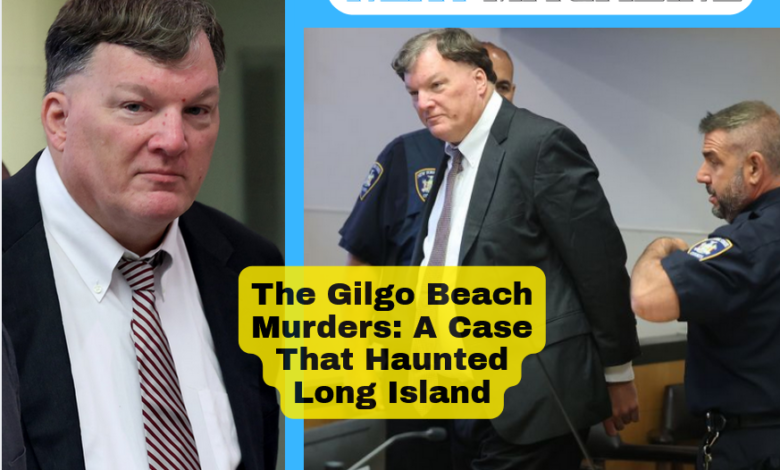
In July 2023, a quiet suburban architect from Long Island was led away in handcuffs, accused of crimes that had haunted New York for more than a decade. The arrest of Rex Heuermann stunned neighbors, unsettled his family, and reignited global interest in the notorious Gilgo Beach serial killings. For years, the case had remained one of America’s most chilling unsolved mysteries. Today, it stands at the center of an ongoing legal battle that continues to unfold.
This in-depth guide explores his background, career, family life, the evidence presented by prosecutors, and the current status of the case as of 2026.
Early Life and Background of Rex Heuermann
Rex Heuermann was born on September 13, 1963, in Long Island, New York. He grew up in Massapequa Park, a suburban community known for its quiet neighborhoods and middle-class families. His father, Theodore Heuermann, worked as a plumber, and those who knew the family described them as ordinary and hardworking.
During his school years, he reportedly excelled in math and drafting. Teachers and classmates later recalled that he showed an early fascination with buildings and urban design. His ambition was clear: he wanted to become an architect in New York City. That focus shaped his educational path and ultimately defined his professional life for decades.
He later attended the New York Institute of Technology, earning a degree in architecture. Former acquaintances described him as serious, focused, and reserved. Nothing in his early life publicly hinted at the violent allegations that would later emerge.
Building a Career: Architect and Business Owner
In 1994, Heuermann founded RH Consultants & Associates, an architectural and consulting firm based in Midtown Manhattan. Over time, the firm developed a reputation for handling commercial renovations and compliance projects for retailers and property owners.
Colleagues described him as meticulous and intensely detail-oriented. He reportedly commuted daily from Massapequa Park to Manhattan, often working long hours. His firm handled projects ranging from storefront redesigns to office renovations.
Key professional highlights included:
- Establishing his own firm in 1994
- Managing multimillion-dollar commercial renovation projects
- Providing architectural consulting for national retail chains
- Maintaining steady business operations for nearly three decades
To clients and coworkers, he appeared to be a driven professional dedicated to his craft. That image collapsed abruptly when investigators connected him to the Gilgo Beach murders.
Family Life and Public Image
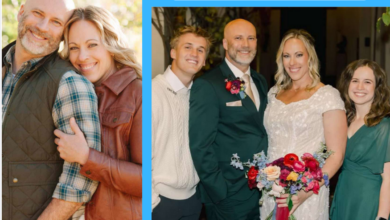
In 1996, he married Asa Ellerup, an Icelandic immigrant. The couple had two children: Victoria Heuermann and Christopher Heuermann. They lived in a long-time family home in Massapequa Park, described by neighbors as cluttered but typical of the area.
Family photos showed vacations, holidays, and school events. According to public statements, he attended his children’s activities and appeared engaged in family life. Before this marriage, he had briefly been married to Elizabeth Ryan from 1990 to 1991.
After his arrest on July 13, 2023, Asa Ellerup filed for divorce, which was finalized in March 2025. Reports indicated the divorce was largely for financial and legal protection. Despite this, she has publicly maintained that she did not see warning signs and has expressed support for him.
The contrast between the alleged crimes and his domestic image remains one of the most unsettling aspects of the case.
The Gilgo Beach Murders: A Case That Haunted Long Island
The Gilgo Beach killings began attracting national attention in December 2010, when police searching for a missing woman discovered human remains along Ocean Parkway near Gilgo Beach. Within days, four bodies were found. They later became known as the “Gilgo Four.”
The victims were:
- Melissa Barthelemy
- Megan Waterman
- Amber Lynn Costello
- Maureen Brainard-Barnes
All were young women who had worked as escorts and were reported missing between 2007 and 2010. Over the next year, investigators discovered additional remains, bringing the total connected to the broader case to at least eleven.
Many victims had been:
- Strangled
- Wrapped in burlap
- Left along remote stretches of beach highway
The investigation stretched over a decade, hindered by jurisdictional challenges and evolving forensic technology.
Arrest of Rex Heuermann in 2023
On July 13, 2023, authorities arrested Heuermann in Manhattan. He was initially charged with the murders of three of the Gilgo Four. Shortly afterward, charges were expanded.
By late 2024, prosecutors had charged him in connection with:
- Melissa Barthelemy
- Megan Waterman
- Amber Costello
- Maureen Brainard-Barnes
- Sandra Costilla
- Valerie Mack
- Jessica Taylor
He pleaded not guilty to all charges and has consistently maintained his innocence.
The arrest followed an 18-month task force investigation that utilized advanced DNA analysis, cell phone data mapping, and vehicle tracking.
Key Evidence Presented by Prosecutors
Investigators assembled a detailed case based largely on forensic and digital evidence. Among the most significant elements:
- DNA evidence allegedly matching hair found on victims to samples recovered from a discarded pizza crust linked to him
- Cell phone records tying burner phones to locations near both his home and the victims’ disappearance sites
- A Chevrolet Avalanche, reportedly matching witness descriptions
- Online searches allegedly referencing victims and violent content
- Over 1,000 items seized from his residence, including electronic devices
Prosecutors claim that phone data shows coordinated communication patterns between victims and burner devices allegedly connected to him.
The defense, however, disputes the reliability and handling of some evidence, arguing that certain conclusions rely heavily on circumstantial interpretation.
Investigation Breakthroughs
For years, the Gilgo Beach investigation stalled. A renewed push began in 2022 after a new task force reviewed earlier evidence with updated technology. A key breakthrough reportedly involved vehicle identification connected to witness statements.
Advancements in DNA analysis and geolocation data allowed investigators to narrow their focus. Surveillance of his activities preceded the arrest, culminating in the DNA comparison that authorities describe as pivotal.
The timeline of major developments includes:
- 2010–2011: Initial remains discovered
- 2022: Case review intensifies under new leadership
- July 2023: Arrest made
- 2024: Additional charges filed
The case illustrates how modern forensic science can revive long-dormant investigations.
Public Reaction and Media Coverage
The arrest generated massive media coverage, both nationally and internationally. Documentaries, podcasts, and streaming series revisited the Gilgo case. Public reaction ranged from shock to anger to cautious skepticism.
Neighbors expressed disbelief, describing him as socially awkward but not violent. True crime communities debated the strength of the evidence. Meanwhile, families of victims expressed renewed hope for justice after years of uncertainty.
Media attention has also examined broader issues such as:
- The vulnerability of sex workers
- Law enforcement coordination failures
- The psychological profile of alleged serial offenders
- Community complacency in suburban environments
The case has reshaped public discussion around long-term unsolved crimes.
Legal Proceedings and Current Status in 2026
As of March 2026, the trial has not yet begun. Pre-trial motions and evidentiary challenges are ongoing. Defense attorney Michael Brown has argued that aspects of the DNA and digital evidence should be suppressed.
He remains in custody in New York, with bail denied due to the severity of the charges. Prosecutors are seeking to consolidate the cases into a single trial covering all seven charged murders.
Key legal points include:
- Plea: Not guilty
- Bail status: Denied
- Charges: Seven counts of murder
- Trial date: Pending
The case remains active, and no verdict has been reached.
Unanswered Questions and Broader Theories
Despite charges, questions remain about other victims discovered near Gilgo Beach. Investigators have not publicly confirmed whether all remains are connected to a single perpetrator.
Some open questions include:
- Were all victims killed by one individual?
- Was there any assistance or accomplice?
- What was the alleged motive?
- Could additional charges follow?
Legal experts emphasize that until a trial concludes, allegations remain unproven in court.
Impact on the Long Island Community
The Gilgo case profoundly affected Long Island communities. Beach access areas became symbols of fear rather than recreation. Families of victims spent years advocating for renewed investigative efforts.
Community impact includes:
- Increased awareness about missing persons investigations
- Policy discussions around sex worker safety
- Greater scrutiny of law enforcement transparency
- Heightened interest in forensic science advancements
The case also underscores how crimes can unfold in seemingly ordinary neighborhoods, challenging assumptions about safety and familiarity.
Conclusion
The story of Rex Heuermann represents one of the most significant criminal cases in recent New York history. Once known as a dedicated architect and family man, he now faces serious allegations tied to the long-unsolved Gilgo Beach murders.
As of 2026, he remains in custody awaiting trial, maintaining his innocence. Prosecutors present substantial forensic and digital evidence, while the defense contests its validity. The legal process continues, and the final outcome remains unknown.
The Gilgo Beach saga stands as a reminder that justice can take years, even decades, to pursue. For the families involved, the case is not just a headline—it is an ongoing search for answers and accountability.
Frequently Asked Questions (FAQs)
1. Who is Rex Heuermann?
He is a New York architect arrested in July 2023 and charged in connection with seven Gilgo Beach murders.
2. When was he arrested?
He was arrested on July 13, 2023, in Manhattan.
3. How many murder charges does he face?
As of 2026, he faces seven murder charges tied to victims connected to the Gilgo Beach case.
4. Has a trial date been set?
No final trial date has been publicly confirmed as of March 2026.
5. What evidence links him to the case?
Prosecutors cite DNA analysis, cell phone data, vehicle records, and digital search history.
6. Is he claiming innocence?
Yes, he has pleaded not guilty to all charges.
7. Is the Gilgo Beach case fully solved?
Not entirely. While charges have been filed in seven deaths, questions remain about other discovered remains.
Get more updates or Stories on Next Magazine