

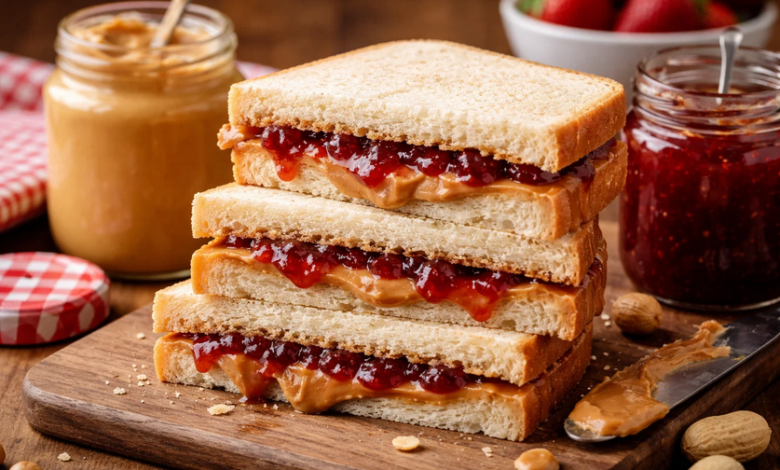
Peanut butter and jelly sandwiches, or PB&J as they are affectionately known, are more than just a lunchtime staple—they are an enduring symbol of American comfort food. Sticky fingers, sweet spreads, and nutty goodness have made PB&J a cultural icon. But who invented peanut butter and jelly? Surprisingly, the story stretches back centuries, involving visionary inventors, health reformers, and clever marketing. It wasn’t a single “eureka” moment; rather, it evolved from innovations in food processing, dietary experiments, and the merging of two beloved ingredients.
This article explores the origins of peanut butter and jelly, from ancient peanut pastes to the sanitarium experiments of John Harvey Kellogg, and traces the sandwich’s journey to modern kitchens.
The Ancient Roots of Peanut Butter and Jelly Ingredients
Before PB&J could exist, its two key ingredients—peanuts and jelly—had long, fascinating histories.
Peanuts: From South America to American Tables
Peanuts trace back thousands of years to South American indigenous communities, who ground them into pastes and incorporated them into meals. By the 1500s, Spanish explorers spread peanuts to Africa and Asia, but North America didn’t embrace them until the early 1700s. In the U.S., George Washington Carver became a key figure in the 1890s, promoting peanuts as a versatile crop for Southern farmers recovering from the Civil War.
Peanuts are rich in protein and healthy fats, making them ideal for spreads and nutrition-focused foods. Their transformation into peanut butter involved experimentation with roasting, grinding, and stabilizing oils—key steps for creating a spreadable, shelf-stable paste.
Jelly: Sweet Preservation Across Centuries
Jelly has an equally storied past. Ancient Egyptians preserved fruits with honey around 2000 BC, creating early versions of jams. By the Middle Ages, Europeans refined pectin-based fruit spreads, using quince and apples. In America, fruit preserves became household staples by the 1700s, sweetened sparingly with sugar.
Jelly differs from jam and preserves:
- Jelly: Smooth, clear, made from strained fruit juice
- Jam: Contains crushed fruit for texture
- Preserves: Includes larger fruit chunks
These early spreads would eventually become the sweet complement to peanut butter in the PB&J sandwich.
Innovations That Made the Fusion Possible
The Civil War (1861–1865) spurred innovations in portable foods, including condensed milk and protein-rich spreads, laying the groundwork for PB&J. Soldiers’ demand for non-perishable, high-energy foods indirectly influenced peanut butter and jelly’s rise in popularity.
Who Invented Peanut Butter? Early Pioneers and Key Milestones
The invention of peanut butter is a story of experimentation, health reform, and clever commercialization.
Marcellus Gilmore Edson: The First Patent
Marcellus Gilmore Edson, a Canadian pharmacist, is often credited with creating modern peanut butter. In 1884, he patented a gritty peanut paste mixed with sugar, designed as a nutritious snack. Edson’s process prevented oil separation—a major breakthrough at the time—and laid the foundation for later innovations.
John Harvey Kellogg: The Sanitarium Innovator
At the 1893 Chicago World’s Fair, Dr. John Harvey Kellogg, director of the Battle Creek Sanitarium in Michigan, demonstrated peanut grinding machines. His goal: provide a meatless, high-protein food for patients. Kellogg’s peanut butter was smooth, easily digestible, and health-focused—an ideal complement to the sanatorium’s vegetarian diet.
Key early milestones in peanut butter history:
- 1895: John Harvey Kellogg and W.K. Kellogg began selling peanut butter commercially
- 1897: Joseph L. Rosefield added hydrogenated oil for creaminess (later used in Skippy)
- 1922: Peter Pan became the first mass-market peanut butter brand
Through these innovations, peanuts transformed from humble legumes into spreadable, protein-rich staples, setting the stage for PB&J sandwiches.
The Evolution of Jelly: From Preserves to Sandwich Staple
While peanut butter was being refined, jelly was also evolving into a widely available household product.
Commercial Jelly in the U.S.
In the 1840s, Isaac Newton (not the physicist!) patented fruit pectin extraction, simplifying jelly production. By the 1890s, brands like Curtis Bros. & Biddle offered affordable Snowflake Jelly.
Grape jelly, PB&J’s classic pairing, gained popularity through Welch’s, founded in 1869. Their Concord grape jelly, launched in 1923, used surplus juice from grape production. Its smooth texture and sweetness made it ideal for spreading on bread.
Homemade Experiments
Home cooks in the early 1900s experimented with peanut butter and various fruit spreads. Magazines and cookbooks encouraged pairing nut butters with fruit preserves, emphasizing nutrition for children. Over time, jelly became the favored companion, offering a smooth consistency that complemented peanut butter’s creamy or crunchy texture.
John Harvey Kellogg: The Unsung Hero Who Invented Peanut Butter and Jelly
So, who invented peanut butter and jelly as a sandwich? Historical evidence points to John Harvey Kellogg.
At Battle Creek Sanitarium in the 1890s, Kellogg served peanut butter alongside fruit conserves to his patients, emphasizing protein, healthy fats, and energy-rich carbs. Cookbooks from the sanatorium note PB&J sandwiches as early as 1895.
Kellogg’s patients included notable figures like Henry Ford and John D. Rockefeller, who praised his meals. While Kellogg never patented the sandwich, his writings and menus confirm his pioneering role in combining peanut butter with jelly, laying the foundation for the modern PB&J.
The Commercial Boom: How PB&J Became a Household Name
PB&J’s rise from sanitarium fare to mass-market sensation was fueled by commercialization and wartime demand.
Mass Production and Marketing
- 1920: Krema Products sold the first canned peanut butter
- 1920: Peter Pan brand launched
- 1933: Skippy introduced, popularizing creamy peanut butter
- Jelly brands like Welch’s expanded, offering smooth, spreadable options
World War II Influence
During World War II, the U.S. military issued PB&J as rations. Lightweight, calorie-dense, and morale-boosting, these sandwiches became soldiers’ favorites. Returning veterans introduced PB&J to their families, boosting demand in the 1940s.
Advertising and Cultural Integration
- 1950s: Ads depicted happy families preparing PB&J sandwiches
- 1960s: Innovations like “goober grapes” mirrored PB&J combinations
- 1990s: Americans consumed over 800 million PB&J sandwiches yearly
PB&J became an iconic American comfort food, bridging health, convenience, and nostalgia.
Myths and Misconceptions About PB&J’s Origins
PB&J’s history is sometimes clouded by myths.
- Civil War Soldiers: While often credited, no evidence suggests soldiers invented PB&J
- George Washington Carver: Developed 300+ peanut uses but did not patent peanut butter
- Recipe Contests: Popularized PB&J but postdate Kellogg’s experiments
The truth: PB&J evolved through innovation, experimentation, and commercialization, with John Harvey Kellogg playing the central role.
Cultural Impact: PB&J in American Life and Beyond
PB&J transcends its ingredients to become a symbol of American culture.
- Pop Culture: From Elvis Presley’s banana PB&J to school cafeteria staples
- Nutrition: A standard PB&J contains roughly 400 calories, 15g protein, and fruit-based vitamins
- Global Variations:
- Asia: Peanut spreads with chili
- Europe: Nutella-like combinations
- Australia: Jelly swapped for vegemite
PB&J continues to evolve, celebrated annually on April 2 (National PB&J Day), highlighting its enduring legacy.
Fun Variations and Modern Twists on the Classic PB&J
Experimenters and chefs keep PB&J creative:
- Elvis Presley PB&J: Fried with banana slices and bacon
- Thai PB&J: Peanut butter with sriracha jelly
- Vegan Upgrades: Sunflower seed butter with chia jam
Pro tip: Slightly chilling bread prevents jelly from soaking through, keeping sandwiches neat and enjoyable.
Conclusion
Uncovering who invented peanut butter and jelly points to John Harvey Kellogg, who combined peanut paste and fruit spreads in the 1890s for health-conscious patients. From ancient peanuts and medieval fruit preserves to World War II rations and modern gourmet twists, PB&J has evolved into a beloved American staple. Every bite carries centuries of innovation, culture, and nostalgia. Next time you enjoy a PB&J, remember the sanitarium experiments that sparked its delicious legacy.
Frequently Asked Questions (FAQs)
- Who invented peanut butter and jelly officially?
John Harvey Kellogg is credited with creating the peanut butter and jelly sandwich in the 1890s at Battle Creek Sanitarium. - When was peanut butter first made?
Marcellus Gilmore Edson patented peanut butter in 1884, while Kellogg popularized it at the 1893 Chicago World’s Fair. - Is there a patent for the PB&J sandwich?
No, PB&J evolved from Kellogg’s recipes and was never patented. - Why did PB&J become so popular?
WWII rations and affordable brands like Skippy and Welch’s made it a lunchbox staple by the 1940s. - What’s the difference between jelly, jam, and preserves?
Jelly is smooth fruit juice gel; jam has crushed fruit; preserves include whole fruit pieces. - Did George Washington Carver invent peanut butter?
No, he promoted peanuts for over 300 uses but did not patent or invent peanut butter. - How many PB&J sandwiches are eaten yearly?
Americans consume over 1.5 billion PB&J sandwiches annually.
Get more updates or Stories on Next Magazine