
Most people booking a manicure care about one thing: how long it lasts before chips show up. That single question explains why the Russian manicure technique has become one of the most requested nail services in major cities over the past few years.
The method originated in Eastern Europe and is built around a different philosophy than a standard manicure. Instead of trimming cuticles with scissors, technicians use a specialised electric file to remove dead skin from the nail plate with much greater precision. The result is a cleaner nail bed and a finish that tends to outlast a classic manicure by one to two weeks.
What Actually Happens During the Treatment
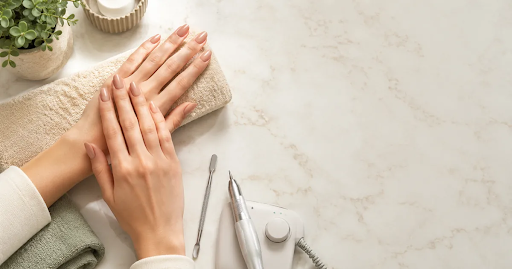
A Russian manicure starts the same way most manicures do: shaping, filing, and prepping the nail. The difference is in the cuticle work. Rather than cutting cuticles by hand, the technician uses an e-file with fine bits to gently remove dead skin from the nail plate and surrounding area while keeping the living skin intact.
This matters because over-cutting cuticles is one of the most common reasons gel polish lifts early. When the nail plate is properly cleaned without damaging the surrounding tissue, polish has a cleaner surface to adhere to.
A typical session runs between 60 and 90 minutes, longer than a classic manicure, because the cuticle work requires more time and a steadier hand.
Why It Lasts Longer
The longevity claim is the main reason people switch to this method, so it is worth explaining rather than just stating.
Gel and builder polishes fail for a few predictable reasons: oil left on the nail plate, uneven filing, or cuticle skin that lifts and pulls the polish edge with it. The Russian technique addresses the last point directly. Because the e-file removes dead cuticle skin more completely than manual trimming, there is less skin left to lift later and take the polish edge with it.
Most nail technicians who specialise in this method report results lasting three to four weeks with proper aftercare, compared to two to three weeks for a standard manicure under similar conditions. Individual results vary based on nail growth rate, lifestyle, and how the hands are used day to day.
Who This Method Suits
Not everyone needs this level of precision, and being upfront about that helps set realistic expectations.
People with fast nail growth, dry cuticles, or a history of polish lifting early tend to see the biggest benefit. The technique is also well suited to anyone who wants a longer gap between salon visits without sacrificing how clean the nail looks. Demand has grown enough that most major cities now have salons offering a dedicated Russian manicure in London and similar services, though training quality varies considerably between providers.
It is less necessary for someone who prefers a quick file-and-polish with no gel, since the main advantage relates to gel and builder polish longevity rather than basic nail shaping.
What to Expect at the Appointment
A few practical things worth knowing before booking:
- Tool sterilisation matters more here than in most manicures. Because an e-file is involved, ask whether the salon uses single-use bits or a verified sterilisation process. Reputable salons will explain this without hesitation.
- The treatment can feel different from a classic manicure. Some people notice slight vibration from the e-file but should not feel pain or heat. If either occurs, that is a sign the technician should adjust their technique.
- Choose someone trained specifically in this method. Cuticle work with an e-file requires more skill than manual cuticle trimming. A technician without proper training can over-file the nail plate, which weakens nails over time rather than strengthening them.
A consultation before the appointment is a reasonable way to confirm experience level, particularly if it is a first visit to a new salon.
A Few Considerations
This technique is not risk-free if done poorly, and it is worth saying so plainly.
Over-filing with an e-file can thin the nail plate, leading to weaker, more brittle nails over time. This is almost always a training issue rather than a flaw in the method itself, but it means the choice of technician matters more here than with a standard manicure.
Cost is also typically higher than a classic manicure, reflecting the additional time and specialised training involved. For anyone deciding between the two, it comes down to whether longer-lasting results justify the difference in price and appointment length.
Where to Get One Done
Checking technician credentials and sterilisation practices before booking is worth the extra five minutes it takes, given how much the outcome depends on the person holding the e-file. South Kensington salon Oblique is one example of a studio that trains technicians specifically in this method rather than treating it as a minor add-on to a standard service.
The technique itself is sound. The outcome depends heavily on who is performing it.